WASHINGTON — The United States is sending thousands of additional Marines and sailors streaming toward the Middle East, three senior officials confirmed to Reuters on Friday, as the bitter U.S.-Israeli campaign against Iran stretches into its third week, according to Arab News.
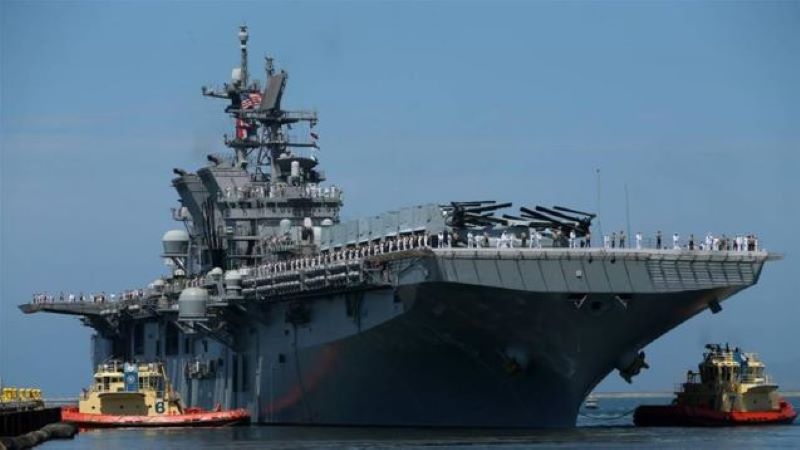
No final order has come down to land American boots inside Iran itself. Instead, the fresh forces led by the amphibious assault ship USS Boxer and its embarked Marine Expeditionary Unit are meant to sharpen the military’s edge for whatever comes next. The deployment, departing the West Coast three weeks earlier than planned, will join roughly 50,000 U.S. troops already scattered across the region and bring a second Marine Expeditionary Unit into play. Each unit typically numbers about 2,500 battle-ready Marines, equipped to launch air strikes from the sea or storm ashore if called upon.
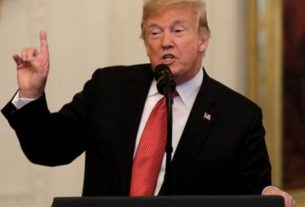
President Donald Trump struck a cryptic note with reporters on Thursday, insisting he was not “putting troops anywhere” while adding pointedly that he would never telegraph such moves to the press. The White House and Pentagon offered no immediate comment.
Behind the scenes, military planners have quietly weighed bolder steps in the still-young conflict that erupted February 28. Among the options under discussion: seizing control of the vital Strait of Hormuz, perhaps by positioning forces along Iran’s coast and even landing troops on Kharg Island, the small but crucial hub that handles nearly 90 percent of Iran’s oil exports.
Such moves, even if limited, carry heavy political weight at home. Trump campaigned hard on keeping America out of fresh Middle East quagmires, yet a fresh Reuters/Ipsos poll closing Thursday revealed stark unease: 65 percent of Americans expect him to order a large scale ground war in Iran, while only 7 percent say they would support it.
On Friday, the president turned his fire outward, lashing NATO allies in a blistering social media post. He branded them “cowards” and declared the alliance a “paper tiger” without U.S. muscle. Trump demanded that Europe and others join the effort to reopen the Strait of Hormuz, whose closure has sent global oil prices soaring, while complaining they reap the benefits but shun the risks.
Several NATO members and partners, including Germany, Britain, France, Italy, the Netherlands, Japan, and Canada, issued a joint pledge Thursday to support safe passage through the waterway. Yet German Chancellor Friedrich Merz conditioned any help on an end to fighting, and French President Emmanuel Macron emphasized de-escalation, saying no European leader showed appetite for joining the fray.
The coming weeks may reveal whether words turn to warships and whether America’s widening footprint in the Gulf draws the nation deeper into a war many voters dread.