The war between the United States, Israel, and Iran has entered a dangerous new phase, with threats of heavier attacks, rising casualties, and a widening regional impact. On Monday, U.S. President Donald Trump warned that the most powerful strikes against Iran had yet to come, even as military leaders cautioned that the campaign would take time and could bring further losses.
“We haven’t even started hitting them hard,” Donald Trump said in an interview. “The big wave hasn’t even happened. The big one is coming soon.”
At the Pentagon, U.S. Defense Secretary Pete Hegseth insisted the military operation was focused and controlled. “We’re hitting them surgically, overwhelmingly and unapologetically,” he said, adding that Washington did not seek an “endless war.” He confirmed there were currently no American ground troops in Iran, though he did not rule out that possibility later.
A Long Fight Expected
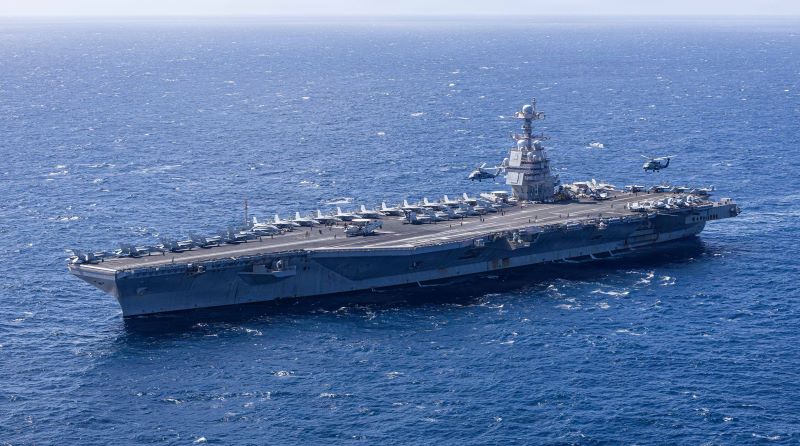
America’s top military officer, Dan Caine, warned that the goals of the campaign would not be achieved quickly. The United States and Israel have targeted Iran’s missile systems, naval forces, and command centers, but he said these objectives would require “difficult and gritty work.”
“This is not a single overnight operation,” he told reporters. More casualties, he said, are likely as fighting continues.
The Pentagon confirmed that four U.S. service members have been killed during the operation, with several others injured. Trump called them “true American patriots” but acknowledged that losses may grow. “That’s the way it is,” he said.
In a separate incident, three American F-15E fighter jets crashed over Kuwait during active combat operations after being mistakenly shot down by Kuwaiti air defenses. All six crew members ejected safely and survived. The planes had been flying in support of the U.S. campaign, known as Operation Epic Fury.
Strikes Spread Across the Region
The conflict widened further on Monday as Israel and Iran traded attacks beyond their borders. Israel said it carried out an airstrike in Beirut that killed Hussein Makled, identified as the head of intelligence for the Lebanese armed group Hezbollah. Israeli forces also struck additional Hezbollah targets in Lebanon after the group launched missiles and drones toward Israel.
Iran, meanwhile, said it targeted Israeli government and military sites, including offices linked to Prime Minister Benjamin Netanyahu and the Israeli Air Force. Iranian state media reported new missile launches toward Israeli territory, triggering air-raid sirens in major cities such as Tel Aviv and Jerusalem.
Explosions were also reported in Tehran, the Iranian capital, as U.S. and Israeli airstrikes continued for a third day. Israel said its air force had achieved aerial superiority over Tehran and struck intelligence and security headquarters across the city.
The fighting has shaken the wider Middle East. Iranian forces claimed attacks on U.S. bases in Kuwait and Bahrain and on oil tankers in the Persian Gulf and Strait of Hormuz, key routes for global energy supplies. Shipping data showed hundreds of vessels anchoring in nearby waters as traders feared surging oil prices.
Air travel has also been heavily disrupted. Major regional airports, including Dubai, were closed as airlines rerouted flights away from conflict zones, creating one of the largest aviation interruptions in recent years.
Nuclear Site Hit and Regional Condemnation
Iran confirmed that its major nuclear facility at Natanz had been struck during U.S.-Israeli operations. Its ambassador to the United Nations nuclear watchdog condemned the attack as a violation of international law and said the site had been under safeguards.
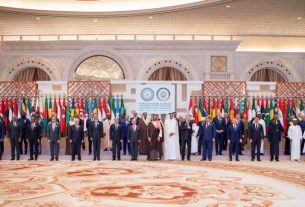
At the same time, several Gulf states including Qatar, Saudi Arabia, Bahrain, Jordan, Kuwait, and the United Arab Emirates issued a joint statement condemning Iran’s missile and drone attacks across their territories. They described Tehran’s actions as a “dangerous escalation” that threatened civilians and regional stability.
The countries pledged to defend their sovereignty and praised joint air-defense cooperation that they said prevented greater destruction.
Iran’s Leadership Shifts
Inside Iran, political uncertainty has deepened. President Masoud Pezeshkian announced that a temporary leadership council had assumed the duties of Supreme Leader after the reported assassination of Ali Khamenei. Iranian officials vowed not to negotiate with Trump and accused the United States of seeking regime change.
Trump, in turn, called on Iranian military and police forces to stop fighting, promising immunity to those who surrendered while warning of “certain death” for those who resisted. He also urged Iranians to rise against their government. “Take back your country,” he said in a video message.
Civilians Flee and Fear Spreads
As bombs fell on military sites, fear spread among civilians. Hundreds of Iranians crossed into Turkey, some describing explosions in Tehran and long lines at gas stations. Others said daily life continued in some regions but that anxiety was growing.
In Beirut, residents fled neighborhoods targeted by Israeli strikes, crowding roads in the early morning hours. Across Israel, sirens and missile warnings sent families rushing to shelters.
Political Risks at Home
The growing conflict may also carry political risks in the United States. With congressional midterm elections approaching, an extended war could affect Trump’s Republican Party. A recent poll found only about one in four Americans support the military operation.
Still, Trump has vowed to continue strikes “until all our objectives are achieved.” U.S. forces have already hit more than 1,000 Iranian targets since the start of major combat operations, the military said.
Military leaders caution that the campaign may last weeks. Trump himself suggested it could continue for at least four.
For now, the region remains on edge bracing for the “big wave” of attacks the U.S. president says is still to come, and fearing how far the conflict might spread before it ends.