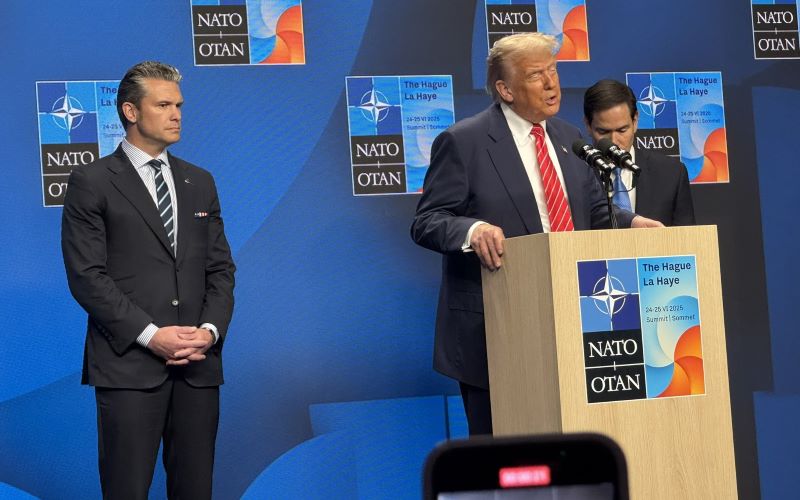
In The Hague on June 25, President Trump declared the Iran–Israel conflict over, proclaiming a resounding “victory for everybody” and announcing that Washington will pursue talks with Tehran next week, as reported by Reuters. He framed his decision to deploy massive bunker-busting bombs on Iranian nuclear installations—Natanz, Fordow, and Isfahan—as decisive, stating they had been “obliterated” by U.S.-led strikes.
Trump’s bold rhetoric, however, collided with more cautious intelligence assessments. The U.S. Defense Intelligence Agency concluded the strikes may have delayed Iran’s nuclear program by mere months—not years as claimed—while the International Atomic Energy Agency, led by Rafael Grossi, underscored the need to reinstate inspectors to properly measure the impact.
Despite the disparity, Trump believes Iran will now pivot to diplomacy. He floated the possibility of signing a nuclear non-proliferation pact next week, while downplaying its necessity: “I don’t think it’s that necessary,” he remarked . Still, he warned that if Tehran resumes nuclear enrichment, further strikes are a certainty: “Sure,” he said when asked if the U.S. would attack again.
As a fragile ceasefire holds, Iranians and Israelis cautiously return to normalcy. Israel’s Atomic Energy Commission asserts the strikes have delayed Iran’s bomb ambitions by years, a position the White House shared with the UN.
Mired between bravado and uncertainty, Trump’s announcement of next week’s Iran discussions walks a delicate line. It attempts to transform military might into diplomatic leverage, even as experts and agencies press to verify whether the bombs truly stamped out Iran’s nuclear capability—or only buried its ambition deeper underground.