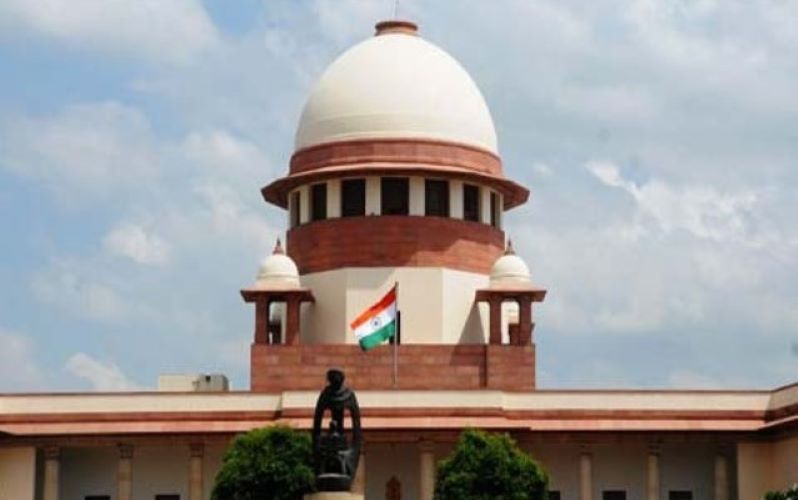
New Delhi — The Supreme Court raised strong concerns while hearing petitions against the Waqf Amendment Act, especially focusing on the issue of ‘Waqf by user’ and the inclusion of non-Muslims on the Central Waqf Council.
A bench led by Chief Justice Sanjiv Khanna, along with Justices Sanjay Kumar and KV Vishwanathan, heard 73 petitions challenging the new Waqf law. The Act has triggered protests in several parts of the country, with many arguing it violates religious rights.
The Chief Justice began the hearing by asking whether the matter should be sent to a High Court and what key issues the petitioners planned to argue. Senior Advocate Kapil Sibal, representing one of the petitioners, said several parts of the new law violate Article 26 of the Constitution, which protects the right to manage religious affairs. He also questioned the powers granted to the Collector, saying it was unconstitutional for a government official to act like a judge.
Sibal then highlighted the issue of ‘Waqf by user’, where land used for religious or charitable purposes over a long time is treated as Waqf, even without official documents. The new law, however, excludes disputed or government-owned land from this provision. Sibal argued that many Waqf properties, some established centuries ago, have no written records but are still important to the community.
Senior Advocate Abhishek Manu Singhvi added that half of the 8 lakh Waqf properties in India are ‘Waqf by user’. Chief Justice Khanna responded, noting the seriousness of erasing such historical records, stating, “You cannot undo what has existed for centuries.”
The court then questioned the inclusion of non-Muslims in the Waqf Council, asking the Centre if it would allow Muslims on Hindu religious boards. “Say it openly,” said the Chief Justice.
Solicitor General Tushar Mehta defended the law, saying it was debated in Parliament and passed with proper procedures. The court warned that invalidating existing Waqf properties or court judgments would raise serious issues.
The Chief Justice also called the violence during protests “very disturbing.” The court emphasized that both concerns and positive aspects of the law must be addressed. The hearing will continue tomorrow.