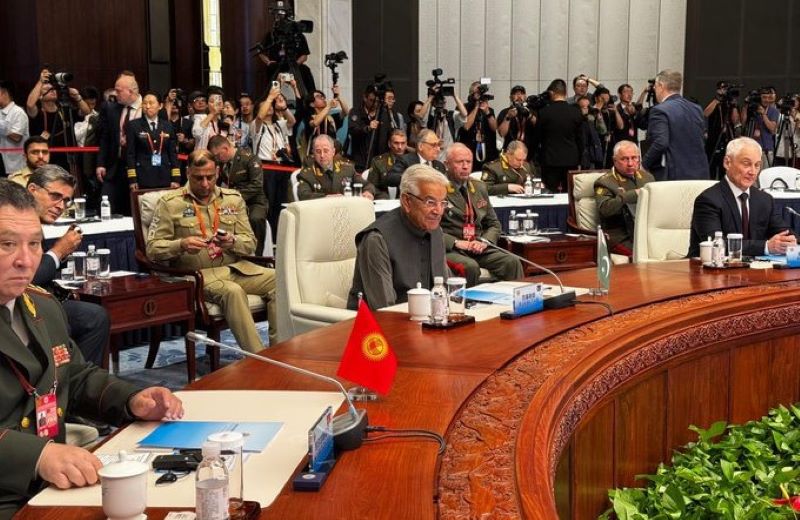
BEIJING, June 26 — A high-level meeting of defence ministers from the Shanghai Cooperation Organisation (SCO) concluded Thursday without a joint statement, as deep divisions between India and Pakistan derailed consensus on references to terrorism, reported by Dawn News.
The 10-member Eurasian security bloc—which includes China, Russia, Pakistan, India, and Iran—gathered in China ahead of its annual leaders’ summit this fall. However, India refused to endorse the communique after it reportedly omitted language referencing the April terrorist attack in Pahalgam, Kashmir, which New Delhi blames on actors with alleged cross-border ties.
Pakistan’s Defence Minister Khawaja Asif, speaking at the session, reaffirmed Islamabad’s commitment to fighting terrorism in all its forms. He condemned what he described as the politicization of counterterrorism efforts, accusing some countries of using the global fight against terror to deflect from internal failures.
“Terrorism is a shared threat,” Asif told the gathering, urging states to hold accountable those who “planned, financed, and sponsored” terrorist acts, including the Jaffar Express bombing in Balochistan. Without naming names, he referenced Pakistan’s custody of Indian naval officer Kulbhushan Jadhav, who, according to Islamabad, confessed to orchestrating attacks on Pakistani soil.
Asif also denounced Israel’s recent 12-day military campaign against Iran, called for a ceasefire in Gaza, and stressed the importance of stability in Afghanistan for regional connectivity and long-term peace.
Despite broad agreement on many security issues—including cyber threats, narcotics trafficking, and extremism—the communique collapsed when India objected to what its foreign ministry described as an incomplete reference to terrorism. “Certain member countries could not reach consensus,” said Indian foreign ministry spokesperson Randhir Jaiswal, without naming Pakistan directly.
A Pakistani delegate, speaking to Dawn.com on condition of anonymity, claimed India faced “diplomatic isolation” at the summit, unable to garner support for its narrative. “India’s attempt to link the Pahalgam incident to Pakistan failed,” the official said, adding that New Delhi stood alone in its stance on Israel’s aggression against Iran as well.
The meeting marked the first face-to-face interaction between Indian and Pakistani defence officials since a deadly exchange earlier this year. Following an attack in Kashmir on April 22 that killed 26, India launched cross-border missile strikes, triggering a brief but intense military escalation that was quelled only through U.S.-led diplomatic intervention.
Despite the discord, China’s defence ministry called the summit a “success,” offering no further comment on the failed joint statement.