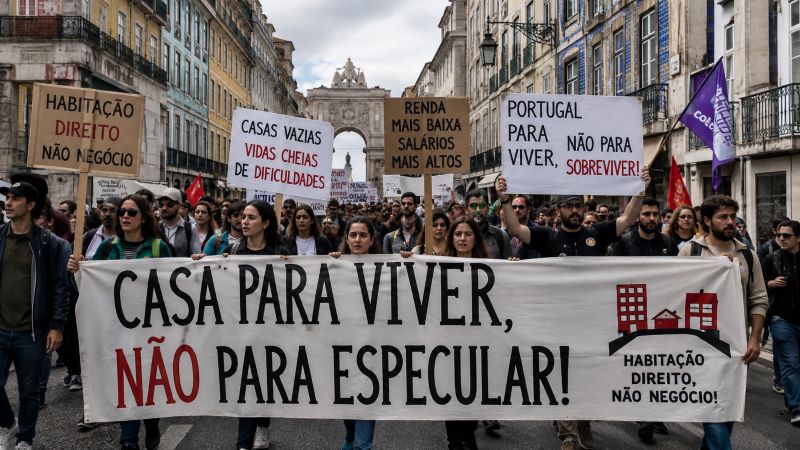
On Saturday, the streets of Portugal filled with voices. Tens of thousands of people marched through more than 30 cities and towns in the biggest demonstration yet against housing costs that have climbed beyond what many families can bear, reported by Arab News.
In Lisbon, drums pounded and chants rose above the crowd as marchers lifted banners and flags. Teenagers walked beside retirees under one slogan: “We won’t let them steal our right to housing.” The mood was part anger, part hope.
For many, the fight is personal. Susana Pacheco, 35, works as a data analyst and moonlights as an astrologer just to keep up with her mortgage. Her worry reaches beyond her own front door. She wonders how her younger sister, still living with their parents, will ever afford a home. Ana Encarnação, 42, called daily life “intolerable,” pointing to rising costs and a growing gap between rich and poor.
The numbers support their frustration. Eurostat reports that from 2015 to 2025, Portugal saw the steepest rise in the EU in the ratio of home prices to income, up 61 percent. The Netherlands came next at 34 percent. Housing prices jumped nearly 20 percent between early 2025 and early 2026, and rents have climbed 68 percent since 2020, according to official figures.
Many blame foreign buyers and investment funds, drawn by Portugal’s mild weather and long coastline. Digital nomads, remote workers and retirees have followed, while booming tourism has turned many city-center apartments into short-term rentals.
Protesters are demanding caps on rent increases, stronger protection from eviction and more affordable housing. The unrest has been building for weeks. Activists have camped in squares in Lisbon and Porto, and riot police with dogs have broken up some gatherings, which critics call heavy-handed. The movement draws inspiration from similar protests in Spain.
The government has cut taxes on new construction, limited short-term rentals and promised 145,000 new homes, though it admits relief will take time. President António José Seguro, whose role is largely ceremonial, called a Council of State meeting and met with some protesters on Friday.