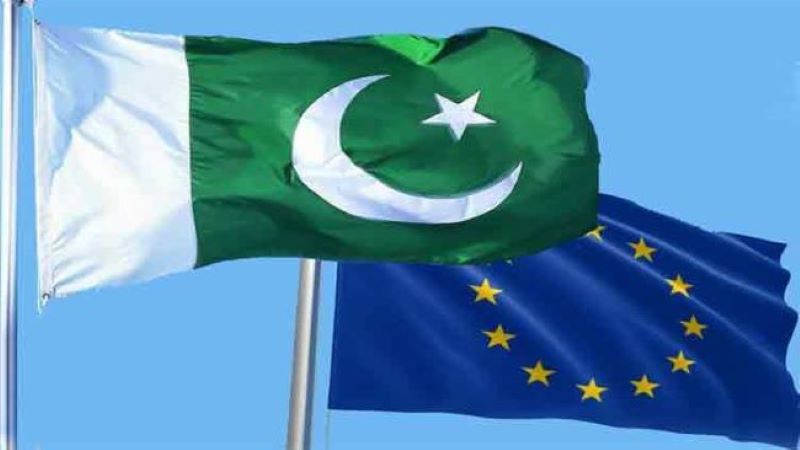
Brussels, July 18 – As Pakistan grapples with growing scrutiny over its human rights record and the state of the rule of law, Islamabad and the European Union (EU) on Thursday reaffirmed their commitment to deepening cooperation, including under the much-debated Generalised Scheme of Preferences Plus (GSP+) framework.
The 10th EU–Pakistan Political Dialogue, held in Brussels, took place against a backdrop of heightened criticism from Brussels over press freedom curbs, suppression of dissent, and judicial independence in Pakistan—issues central to the continuation of the preferential trade arrangement that grants duty-free access to Pakistani exports in the EU market.
Despite the tensions, both sides emphasized mutual resolve to stay engaged, pledging to uphold and implement the 2019 Strategic Engagement Plan (SEP). They also agreed to broaden their dialogue on security, counterterrorism, and regional stability.
“The EU and Pakistan remain strategic partners in a changing world,” said Olof Skoog, Deputy Secretary General of the European External Action Service, who led the EU delegation. Pakistan’s Foreign Secretary Amna Baloch, heading Islamabad’s team, echoed that sentiment, noting the enduring nature of the partnership.
Yet, the undertone of concern was unmistakable. The GSP+ framework, which has become a cornerstone of EU–Pakistan trade relations, requires the implementation of 27 international conventions related to human rights, labor rights, environmental protection, and good governance. In recent months, EU parliamentarians and rights watchdogs have raised alarm over what they describe as democratic backsliding in Pakistan, including widespread allegations of electoral manipulation and suppression of political opposition.
The EU has hinted that the renewal of Pakistan’s GSP+ status—up for review in 2025—is not guaranteed.
Still, the joint communiqué issued after Thursday’s meeting struck a cooperative note. Both sides reaffirmed their commitment to multilateralism, dialogue, and diplomacy, calling for peaceful resolutions to conflicts, including in Ukraine, Jammu and Kashmir, and Gaza. The deteriorating humanitarian situation in Gaza was described as urgent, with both parties backing an immediate ceasefire and a two-state solution.
Migration and mobility were also high on the agenda. The two sides committed to holding the third Comprehensive Migration and Mobility Dialogue in late 2025, aiming to manage legal migration pathways while tackling irregular migration challenges.
In a bid to maintain momentum, the EU and Pakistan agreed to hold the 7th Strategic Dialogue in 2025 and the next Political Dialogue meeting in 2026 in Islamabad.
Whether diplomatic niceties will translate into concrete reforms remains uncertain. For now, Islamabad’s access to lucrative European markets hangs in the balance—dependent not on words spoken in Brussels, but on action taken at home.