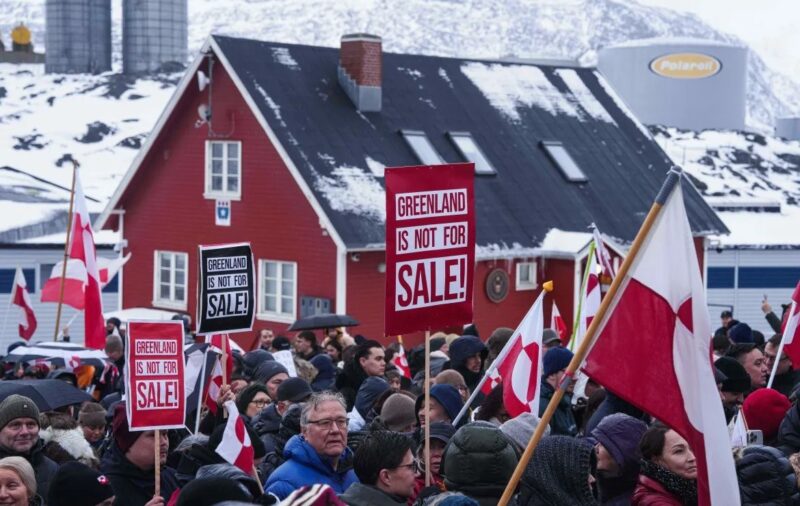
Hundreds of protesters marched through the streets of Nuuk, the capital of Greenland, on Thursday to oppose the opening of a larger United States consulate in the Arctic territory, according to Anadolu Agency. The demonstrations reflected growing public concern over Washington’s increasing diplomatic and strategic interest in the island.
Videos shared widely on social media showed crowds chanting, “Go home USA!” as they moved through the city carrying banners and signs. Some protesters held messages reading, “We don’t want your money,” expressing fears that foreign influence could threaten Greenland’s political independence and cultural identity.
Inside the newly expanded diplomatic office in central Nuuk, guests attended an official reception marking the opening ceremony. Outside, however, the atmosphere was tense as demonstrators gathered in large numbers to voice their opposition.
The upgraded consulate is part of a wider American effort to strengthen its presence in the Arctic region. Interest from Washington has grown steadily in recent years, especially after former US President Donald Trump repeatedly expressed interest in Greenland because of its strategic location and rich natural resources.
Relations between Greenlandic leaders and the United States have remained uneasy. Greenland Prime Minister Jens-Frederik Nielsen chose not to attend the opening ceremony, and several senior officials also stayed away. Lawmakers in Greenland have previously rejected invitations to events hosted by the consulate, pointing to the tense political climate surrounding the issue.
US Ambassador to Denmark Ken Howery attempted to calm concerns by stating that the United States has ruled out any use of force and respects Greenlanders’ right to decide their own future.
Still, Thursday’s protests revealed deep public unease over America’s growing role on the island. For many Greenlanders, the expansion of the consulate represents more than diplomacy, it raises difficult questions about sovereignty, influence, and the future of the Arctic.