Gilgit-Baltistan Unrest Reflects Global Shock and Local Grievances
The violent unrest that erupted in early March 2026 in Gilgit-Baltistan demonstrates how global geopolitical developments can quickly ignite local tensions in politically sensitive regions, reported in a Blog Post By Dr Shabir Chaudhry, a Kashmiri writer and scholar based in London.
The immediate trigger for the protests was the reported assassination of Ayatollah Ali Khamenei, who was said to have been killed on 28 February during coordinated air strikes by the United States and Israel targeting strategic facilities in Tehran. The strikes came amid escalating tensions surrounding Iran’s nuclear programme and its confrontation with Western powers in the Middle East.
News of Khamenei’s death triggered demonstrations in several parts of the Muslim world, particularly among Shia communities who viewed him as a powerful symbol of resistance to Western influence.
In Pakistan, which hosts one of the largest Shia populations outside Iran, protests took place in major cities including Karachi, Lahore, Islamabad, and Quetta. However, the strongest and most volatile reactions occurred in Gilgit-Baltistan, where Shia Muslims form a significant portion of the population.
On 1 March, thousands of protesters gathered in Gilgit and Skardu to express solidarity with Iran and condemn the strikes. Demonstrators reportedly carried red flags and chanted slogans against the United States and Israel. In some cases, anger was also directed at Pakistani authorities.
The situation quickly escalated when security forces moved to disperse the crowds. Eyewitness accounts and local media reports indicated that live ammunition was used during clashes between protesters and security personnel.
The confrontations left several people dead and many injured. Reports suggested that children and young protesters were among the casualties. The death toll in Gilgit-Baltistan was estimated to range between seven and fifteen, contributing to a nationwide figure approaching two dozen fatalities.
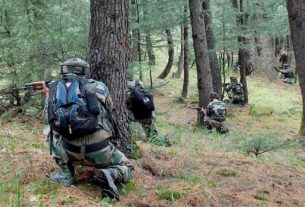
Authorities responded by imposing strict curfews in Gilgit and Skardu, suspending communication services in some areas, and deploying additional security forces to restore order.
The federal government also announced a judicial inquiry into the violence. Mohsin Naqvi appealed for calm, acknowledging public grief over Khamenei’s death while urging citizens to avoid confrontation with the state.
Yet analysts say the scale and intensity of the protests cannot be explained solely by reactions to international events.
Historically, Gilgit-Baltistan formed part of the former princely state of Jammu and Kashmir, whose political future became contested after the partition of the Indian subcontinent in 1947. Today the region remains under Pakistani administration but does not enjoy the same constitutional status as Pakistan’s provinces.
Over the decades, local political groups have repeatedly raised concerns about representation, governance, and control over natural resources. Periodic protests in the region have often reflected demands for greater political rights and administrative autonomy.
The latest unrest therefore unfolded against a backdrop of long-standing political grievances and historical uncertainty.
Pakistan’s internal sectarian landscape also plays a role. Shia communities have often mobilised in response to developments affecting the wider Shia world, particularly events in Iran.
At the same time, Pakistan must balance complex relationships with regional and global powers, including Iran, Western countries, China and Gulf states. Developments in the Middle East can therefore carry both ideological and strategic implications for domestic stability.
The crisis in Gilgit-Baltistan highlights how international conflicts can resonate in unexpected ways at the local level. It also underlines the fragility of stability in a strategically significant region located near the borders of China, India, and Afghanistan.
Human-rights organisations have also expressed concern over reports that young protesters were among those killed, calling for transparent investigations into the use of force.
For many observers, the events serve as a reminder that security measures alone cannot address the underlying challenges in Gilgit-Baltistan. Without meaningful political engagement and efforts to address long-standing grievances, analysts warn that similar unrest could re-emerge whenever global events intersect with local frustrations.