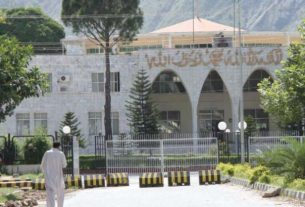
Unusual political unity in Kashmir’s Gilgit-Baltistan signals stability but raises questions about opposition role
GILGIT, June 22: In a rare display of political consensus, Gilgit-Baltistan has formed a broad-based government, with Pakistan Peoples Party (PPP) leader Amjad Hussain Advocate elected unopposed as chief minister, alongside the uncontested appointment of the assembly’s top leadership.
Hussain secured backing from all major parties represented in the 33-member assembly, including PPP, Pakistan Muslim League-Nawaz (PML-N), Istehkam-i-Pakistan Party (IPP), PTI-backed independents, and Majlis Wahdat-ul-Muslimeen (MWM). With no rival candidate entering the race, his election reflects a coordinated political understanding across party lines.
The consensus extended to the legislature, where PPP’s Imran Nadeem was elected Speaker and PML-N’s Malik Kifayat ur Rehman Deputy Speaker, both without opposition. The smooth and uncontested process marks a significant departure from the region’s traditionally fragmented politics.
Analysts view the development as a bid to ensure political stability in the strategically sensitive region of Kashmir’s Gilgit-Baltistan, where governance challenges and development needs remain pressing. A unified front could help accelerate decision-making and policy implementation.
However, the arrangement also raises questions about the strength and independence of opposition within the assembly. Despite supporting the consensus framework, PML-N has positioned itself on the opposition benches and nominated its president and former chief minister, Hafiz Hafeez-ur-Rehman, as Leader of the Opposition. With nine seats, it remains the largest opposition bloc.
Observers note that while consensus politics may reduce immediate conflict, it could limit robust parliamentary debate if opposition parties do not assert their oversight role effectively.
As the fifth elected chief minister, Hussain now faces the task of translating political unity into tangible progress. He is expected to announce his cabinet and policy agenda in the coming days, with focus likely to center on governance reforms, infrastructure, and economic development.
The coming weeks will test whether this rare political alignment delivers stability and results—or simply postpones deeper political contestation.