JERUSALEM — Tens of thousands of Israelis filled the streets of Jerusalem and Tel Aviv over the weekend, demanding Prime Minister Benjamin Netanyahu strike a deal to secure the release of hostages still held by Hamas nearly two years after their abduction.
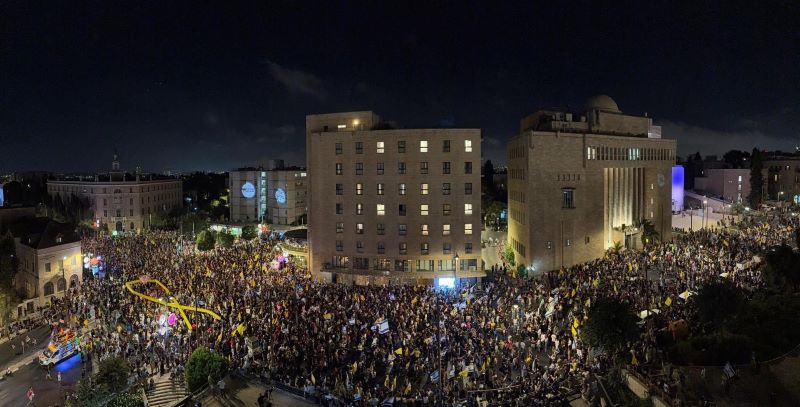
More than 15,000 protesters converged on Jerusalem’s Paris Square, within shouting distance of the prime minister’s residence, in one of the largest demonstrations in months. Families of the hostages led the rally, joined by supporters calling for an end to the devastating war in Gaza.
“Mr. Prime Minister, if something happens, you will pay for it — this is a mother’s word,” cried Anat Angrest, whose son, IDF soldier Matan Angrest, is among those still in captivity.
Of the 251 hostages seized during Hamas’s October 7, 2023, assault on southern Israel — in which 1,200 Israelis were killed — 48 remain in Gaza. As many as 20 are believed to be alive. Israel has not formally responded to a proposed partial deal, insisting instead that “total victory” over Hamas is the surest way to bring the hostages home.
That promise has grown increasingly hollow for many Israelis, who fear continued military escalation only endangers their loved ones. Former senior commanders have warned that the Israel Defense Forces (IDF) have already achieved as much as possible militarily without worsening the humanitarian crisis or jeopardizing the hostages’ survival.
Yet Netanyahu and his government remain resolute. Defense Minister Israel Katz has promised to “open the gates of hell,” posting footage of Gaza high-rises collapsing under Israeli strikes and warning it is “just the start.” The IDF has issued repeated evacuation orders in Gaza City, followed by demolitions of major buildings it claims are used by Hamas as command centers.
The war’s toll continues to climb. Gaza’s health ministry, whose figures are deemed broadly reliable by the United Nations, reports more than 64,000 Palestinians killed since Israel’s campaign began. At least 87 people died in the latest 24-hour period, including children in what aid groups describe as famine conditions. Israel disputes the figures and denies pursuing a “scorched-earth” policy, though nearly all of Gaza has been rendered uninhabitable.
International frustration is mounting. Denmark’s foreign minister, visiting Jerusalem on Sunday, urged Israel to halt its offensive and return to ceasefire negotiations. But Israeli Foreign Minister Gideon Sa’ar dismissed the appeal and hinted at possible annexation of the West Bank — a move some European states warn could destabilize the region further.
Meanwhile, families of the hostages say they will not relent. Their protests, increasingly fierce, echo through Israel’s political core. Whether Netanyahu listens or doubles down on his vow of “victory” may shape not only the fate of the captives but also the trajectory of a war now deep into its second year.