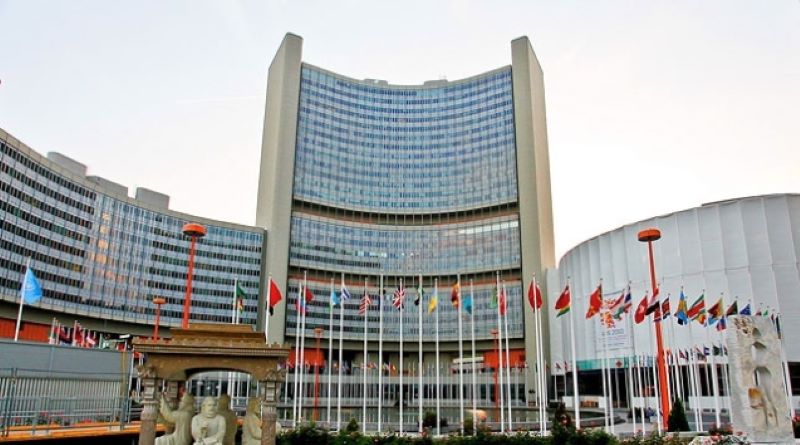
Iran Calls for IAEA Resolution to Condemn Attacks on Nuclear Sites
VIENNA — Iran’s envoy to the International Atomic Energy Agency (IAEA) on Thursday condemned recent attacks and threats against safeguarded nuclear facilities, calling them unlawful acts that jeopardize international peace and the global non-proliferation regime. Addressing the 69th General Conference of the IAEA in Vienna, Reza Najafi urged member states to back a draft resolution reaffirming the absolute prohibition of such attacks and emphasizing the peaceful use of nuclear energy.
“In a world where political pressures often impede decisive action, the unity and principled positions of nations are essential to uphold international law,” Najafi said, opening his statement. “The Non-Aligned Movement’s steadfast support for Iran underscores the vital role of solidarity and multilateral diplomacy in protecting the integrity of the non-proliferation framework.”
Najafi highlighted the legal and humanitarian stakes of attacks against nuclear installations, noting that these facilities, safeguarded by the IAEA, are exclusively devoted to peaceful purposes. “Any attack—or even threat of attack—against such sites constitutes not only a blatant act of aggression but also a direct assault on the credibility of the IAEA safeguards system,” he warned.
The envoy referenced international law, emphasizing that Article 2(4) of the United Nations Charter prohibits the use of force, while Article 51 cannot be distorted to justify premeditated attacks on safeguarded nuclear facilities. He described recent reinterpretations by certain states as a “flagrant abuse of the Charter” and a violation of consensus decisions by the IAEA and the 2010 NPT Review Conference, which reaffirmed the absolute prohibition of armed attacks on nuclear facilities under safeguards.
“These unlawful acts have consequences far beyond national borders,” Najafi said. “They risk catastrophic humanitarian and environmental disasters, undermine international peace and security, and strike at the heart of the global non-proliferation regime. By attacking safeguarded facilities, aggressors dismantle decades of trust painstakingly built within the NPT framework.”
The Iranian diplomat stressed that if safeguarded nuclear facilities can be attacked with impunity, the credibility of the safeguards system collapses, eroding transparency, trust, and the very foundation of the NPT. He urged the IAEA and the international community to act with urgency to defend the integrity of the safeguards regime.
Najafi’s draft resolution, submitted ahead of the conference, seeks to reinforce the IAEA’s mandate and uphold fundamental international law principles. It is designed not to target any specific state but to reaffirm the shared obligations of all member states to ensure the peaceful use of nuclear energy, respect inviolability of safeguarded facilities, and resolve disputes through diplomacy.
The envoy called on all IAEA members to support the resolution, underscoring that silence or inaction would effectively license future aggression. “By failing to speak out, we are not remaining neutral—we are, in effect, granting a license for future acts of aggression against safeguarded nuclear facilities,” Najafi said. “Normalization of such unlawful conduct risks rewriting the rules of international law. What was once unthinkable could become routine, transforming safeguards into military targets.”
Najafi also highlighted Iran’s commitment to international norms. “The Islamic Republic has never sought to violate international law,” he said. “However, when others disregard these rules, Iran cannot consider itself bound by obligations abandoned by others. Responsibility for any consequences lies with those who initiate unlawful force.”
The Iranian envoy traced the legal framework protecting nuclear facilities to decades of international agreements, including the IAEA Statute, UN Charter, and the 2010 NPT Review Conference. The draft resolution reinforces the principle that all nuclear energy development must occur in a secure environment, free from threats or attacks, and that disputes should be resolved through dialogue and diplomacy.
Najafi’s speech was both a legal argument and a moral appeal. He painted a stark picture of the global consequences of attacks on nuclear sites: loss of trust in safeguards, increased proliferation risk, and a weakening of multilateral institutions designed to prevent conflict.
“Silence in the face of unlawful aggression emboldens impunity and incentivizes concealment,” he said. “The long-term consequences could be the erosion of the non-proliferation regime, leaving the world less secure and more vulnerable to nuclear risks.”
The envoy also lauded the role of the Non-Aligned Movement in defending the rights of member states to peaceful nuclear energy. “NAM’s unwavering support underscores the importance of collective diplomacy,” Najafi said. “Solidarity among nations serves as a bulwark against violations of sovereignty and international law.”
Najafi concluded with a powerful declaration of Iran’s position. “Iran affirms its stance: we condemn attacks on peace, yet we remain fully prepared to defend our nation by all necessary means,” he said. “We will resist aggression with unwavering determination, to the last breath, until the final heartbeat of this land. This is our tribute to those who sacrificed their lives in defense of our rights and our sacred cause.”
The Iranian statement comes amid heightened global attention on nuclear security, following attacks and threats against nuclear facilities worldwide. By submitting a resolution at the IAEA, Iran seeks to rally international consensus on the inviolability of safeguarded nuclear sites and to reaffirm the peaceful purpose of nuclear energy development.
The draft resolution emphasizes that attacks on safeguarded nuclear sites are not merely local or bilateral issues but global security concerns, affecting international peace, environmental safety, and the integrity of the non-proliferation regime. It also underscores the importance of the IAEA’s impartiality and independence in monitoring nuclear activities and maintaining transparency.
Observers note that Iran’s move to table the resolution strategically aligns with its broader diplomatic efforts to assert legal protections for its nuclear program while positioning the country as a defender of international law. The appeal also underscores Iran’s reliance on multilateral institutions to address grievances and prevent escalation of conflicts involving nuclear infrastructure.
By emphasizing legal, moral, and strategic arguments, Najafi framed the protection of nuclear facilities as both a matter of principle and necessity. His address called upon IAEA member states to act decisively, sending a clear message that threats or attacks against safeguarded sites cannot be tolerated under any circumstances.
As the IAEA deliberates on Iran’s proposed resolution, the international community faces a test of commitment to non-proliferation norms, multilateral oversight, and the peaceful use of nuclear energy. The outcome of the vote will signal how strongly member states are willing to defend the integrity of the safeguards system and the principles of international law.
Najafi’s address thus blends legal rigor, ethical appeal, and geopolitical awareness, reinforcing the centrality of the IAEA in preserving global nuclear safety. The speech underscores the urgency of protecting safeguarded facilities, not only for Iran’s security but for the stability of the global nuclear order.