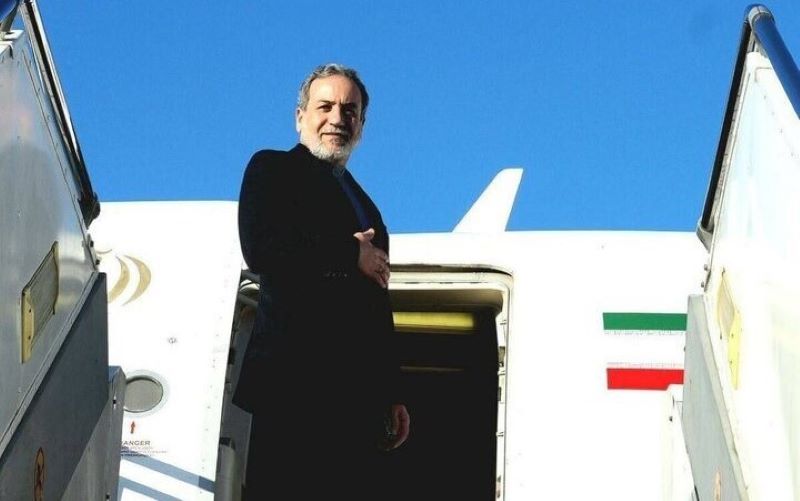
Iran’s Foreign Minister Abbas Araghchi returned to Islamabad on Sunday as part of a fast-moving diplomatic tour, seeking to coordinate with regional partners amid ongoing tensions and uncertain talks with the United States, according to IRNA.
Araghchi arrived from Oman, where he had met Sultan Haitham bin Tariq and senior officials to discuss regional developments and mediation efforts aimed at easing conflict. He was welcomed at Nur Khan Air Base by Pakistan’s Interior Minister Mohsin Naqvi and Iran’s ambassador to Pakistan.
This marks his second visit to Pakistan in less than 48 hours. He had first arrived in Islamabad on Friday, holding meetings with Prime Minister Shehbaz Sharif, Army Chief Asim Munir, and Foreign Minister Ishaq Dar before traveling on to Muscat. His return signals continued consultations with Pakistani leaders as part of efforts to manage rising regional tensions.
According to Iranian media, part of Araghchi’s delegation had briefly returned to Tehran after earlier talks to seek further guidance. The team is expected to regroup in Islamabad before the foreign minister continues on to Moscow, the final stop of his three-country tour.
The visit comes at a sensitive moment for US-Iran diplomacy. Planned talks in Islamabad faced a setback after US President Donald Trump abruptly cancelled a delegation that had been expected to meet Iranian officials. In a public statement, Trump cited internal disagreements within Iran’s leadership and expressed frustration over the pace of diplomacy.
Despite the disruption, Islamabad has remained a key venue for dialogue, following a recent ceasefire reportedly brokered by Pakistan that opened the door to rare direct contacts between the US and Iran. The arrival of foreign delegations has led to heightened security in the city, including temporary road closures.
While details of Araghchi’s current meetings have not been fully disclosed, his rapid travel between capitals highlights the urgency of diplomatic efforts. With tensions still high and negotiations uncertain, regional actors appear to be working behind the scenes to prevent further escalation.