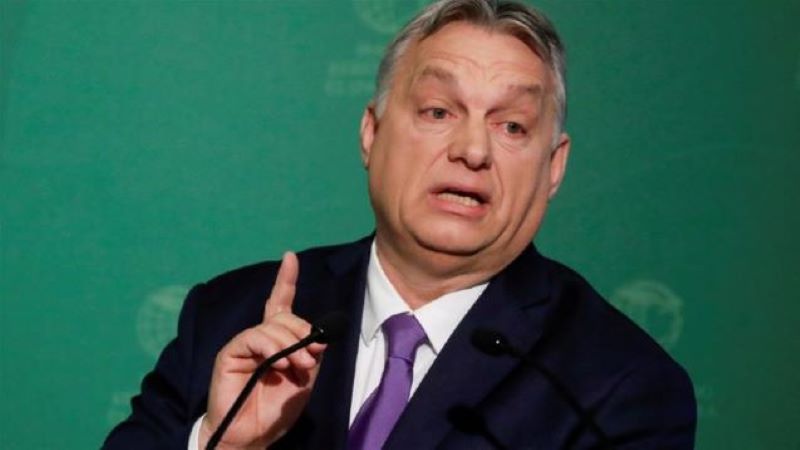
As Hungary moves toward Sunday’s parliamentary election, Prime Minister Viktor Orbán faces the most serious electoral challenge of his 16 year rule, with most major opinion polls showing the opposition Tisza Party in the lead, accordiong to Euro News.
The election has become one of the most closely watched political contests in Europe, with sharply differing survey results reflecting both a deeply divided electorate and the high stakes of the vote. Most independent polling agencies now suggest that the opposition, led by Péter Magyar, has built a significant advantage over Orbán’s ruling Fidesz party.
The most striking forecast comes from the respected polling firm Medián, which projects Tisza winning between 138 and 143 seats in Hungary’s 199-member parliament. Such a result would hand the opposition a two-thirds supermajority, enough to amend the constitution and reshape key national laws.
Other major pollsters also place Tisza ahead, though by narrower margins. Recent surveys from Publicus, IDEA, and Iránytű show support for Tisza ranging from 50% to 52%, compared with 37% to 40% for Fidesz.
Still, not all polls agree. The Nézőpont Institute, which has often shown stronger support for the ruling party, predicts a narrow Fidesz lead, underlining the uncertainty that remains just days before voters go to the polls.
Analysts say recent government scandals and public dissatisfaction with the current administration may have weakened Fidesz’s position. Surveys also suggest a growing public appetite for political change, with more than half of respondents in some studies saying they want a new government.
Demographics appear to be playing a decisive role. Younger and more educated voters strongly favor Tisza, while Fidesz retains stronger support among older Hungarians, particularly those over 64. In a significant shift, some recent surveys even show the opposition leading in rural areas, long considered a traditional Fidesz stronghold.
Despite the polling trends, Orbán has publicly projected confidence, saying his party remains “on course to win.” At the same time, senior government officials have acknowledged that achieving another two-thirds majority now appears highly unlikely.
For Hungary, Sunday’s vote could mark a political turning point: either the continuation of Orbán’s long dominance or the beginning of a new chapter under a rapidly rising opposition force.