Traders in Gilgit-Baltistan Escalate Stand Against Federal Taxes, Citing Disputed Status
GILGIT-BALTISTAN — For more than three weeks, traders in Gilgit-Baltistan have maintained a blockade of the Karakoram Highway at the Khunjerab Pass, demanding that the Pakistani federal government cease imposing what they describe as illegal taxes. They argue that because Gilgit-Baltistan does not enjoy full constitutional status within Pakistan, federal income tax, sales tax, and other levies are being applied without legitimate legal or representative backing.
The protest, now entering its 23rd-24th day, has shut down trade and travel between Pakistan and China at a critical corridor. Thousands of people — including local residents, transporters, hotel owners, foreign tourists and trade agents — are stranded or suffering losses as consignments remain stuck at the Sost Dry Port. Goods have reportedly perished or deteriorated after months of delay.
Protest leaders, drawing support from youth, religious groups, and local political parties, are calling for not only the repeal of federal taxation in the region, but also clarification of Gilgit-Baltistan’s constitutional status. They assert that without representation in federal legislative bodies, taxing them is both unjust and, in their view, illegal.
The Federal Board of Revenue (FBR), in response, has established a seven-member committee to examine and address the grievances of the traders. The committee’s mandate includes reviewing which federal taxes could be deemed applicable or exempt, especially for goods imported via the Khunjerab Pass destined for use within Gilgit-Baltistan.
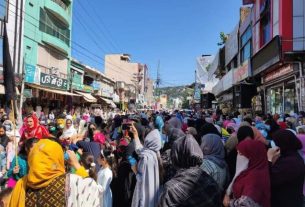
Social media platforms have amplified the protests. Hashtags referencing #NoTaxationWithoutRepresentation, #GilgitBaltistan, and #StopIllegalTaxes are circulating widely in local and national forums. Photos shared by protesters show rows of stranded trucks at Sost, defaced or faded goods, and large gatherings blocking the highway. Many users express solidarity, while others debate whether constitutional reform or full integration is the solution. (While social media reporting is strong, independent verification of all claims is still in process.)
As of the latest reports, the protests remain peaceful but determined. Authorities have not yet met all demands. Meanwhile, economic impact is mounting. The backlog of goods, lost business, and strain on local livelihoods have raised pressure on Islamabad to act swiftly. The traders insist their protest will continue until federal taxes are withdrawn or until a legal ruling clarifies what taxes—if any—are legitimate in Gilgit-Baltistan given its unique constitutional status.