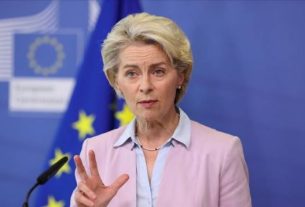
EU foreign ministers arrived in Wicklow, Ireland, on Wednesday with a single, urgent focus: the failed explosives attack at Leipzig airport, an incident that has sharpened Europe’s sense of vulnerability and its determination to respond as one. Before the informal meeting began, EU chief diplomat Kaja Kallas announced she had summoned the Russian envoy to the EU, a clear diplomatic signal that Brussels sees the plot as part of a wider campaign of Russian hybrid aggression on European soil. In Vienna, State Secretary Sepp Schellhorn (NEOS) said Austria would first coordinate with Germany before deciding whether to call in Moscow’s ambassador, reflecting the careful, joint approach now shaping the continent’s response.
Schellhorn called the Leipzig attempt “the peak of what a hybrid war of aggression against Europe also means,” stressing “full solidarity with Germany” and the need for “strength through unity” that does not slip into sluggishness. For many ministers, the attack was not an isolated crime but a test of whether Europe can act together when faced with sabotage, intimidation and covert violence inside its own borders.
That unity is taking concrete shape in the 22nd EU sanctions package against Russia, now being drafted for completion by October and expected to be among the broadest yet. Kallas said she aims to add around 1,600 individuals and companies linked to Russia’s military-industrial complex to the sanctions list, with more names possible once formal procedures are completed. She described the wave of hybrid attacks across Europe as a “wake-up call” for states that have hesitated to respond firmly, urging all members to “pool all efforts if we want to end this war.” German officials expressed gratitude for the show of backing, calling it the “unified stance” the moment demands.
Irish Foreign Minister Helen McEntee, holding the rotating Council presidency, said sanctions remain central to keeping pressure on Moscow and ensuring unwavering support for Kyiv, while ministers would also explore additional response options. German Foreign Minister Johann Wadephul, moved by the solidarity, insisted that Russia must understand its strategy of mixing violence with hybrid tactics has failed. “The more united we are in Europe, also beyond the circle of EU members, the more successful we will be in finally bringing this conflict to an end,” he said, framing cohesion as both shield and strategy.
Beyond the meeting room, the diplomatic ripple spread quickly: France summoned Russia’s chargé d’affaires in Paris and called for EU sanctions against Moscow’s “shadow fleet,” while Finland, the Netherlands and Belgium each called in Russian ambassadors to protest.