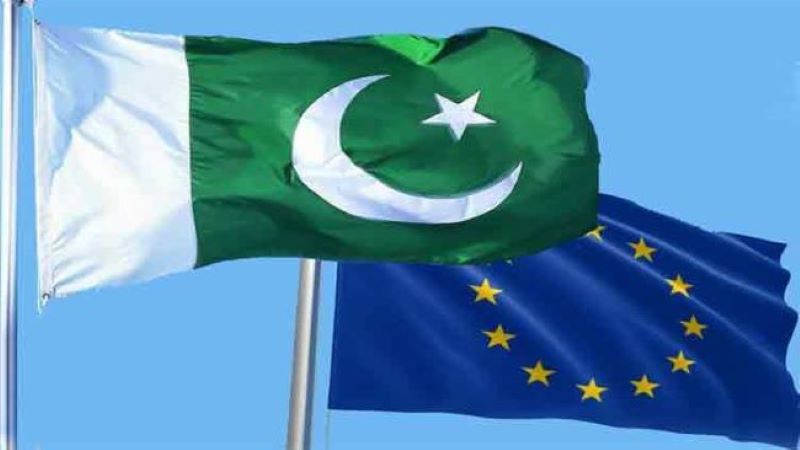
In a compelling turn, the European Union has issued a sharp warning to Pakistan: its coveted duty-free access to Europe under the GSP+ trade scheme is at risk unless the country demonstrates meaningful and sustained improvements in human rights, labor protections, and media freedom, reported by Dawn News.
EU special envoy Olof Skoog, concluding his recent visit to Islamabad, conveyed a message that trade cannot be separated from values. The EU underscored that Pakistan’s continuation in the GSP+ program hinges on real-world reform—particularly on thorny issues including blasphemy laws, forced conversions and marriages, enforced disappearances, women’s rights, and judicial independence.
Since gaining GSP+ status in 2014, Pakistan’s exports to the EU have more than doubled—making it the program’s largest beneficiary. Yet as the midterm of its current monitoring cycle approaches, the EU is pressing for more than rhetoric; it demands action.
This push for accountability arises as Pakistan prepares for reapplication under a new GSP+ framework—anticipated to include stricter compliance requirements and regular action plans, with an extended monitoring timeline from two to three years.
The EU’s scrutiny extends across thirteen priority areas being monitored in 2024–2025, such as enforced disappearances, labour inspection, collective bargaining, violence against vulnerable groups, freedom of expression, and environmental degradation.
Meanwhile, the latest parliamentary action in Pakistan has raised concerns. A newly enacted law empowering the state to penalize online disinformation—viewed by critics as a threat to press freedom—has sparked alarm both at home and abroad.
Despite legislative gestures such as reducing the number of capital offenses, the EU remains vigilant. Ambassador Riina Kionka, who is concluding her tenure, urged Pakistan to continue moving forward on religious liberty, freedom of assembly, and broader human rights gaps—even as debates over a new GSP+ regulation loom.
On the development front, the EU is stepping up with a €20 million “Better Governance and Business Environment” grant. Signed in July, the initiative is designed to strengthen SMEs—particularly those led by women—nurture green investments, and foster institutional reforms aligned with the EU’s Global Gateway and Green Deal strategies.
As the November monitoring mission draws near, Pakistan stands at a critical crossroads. Its GSP+ lifeline—vital for economic growth and export competitiveness—is no longer assured by past progress alone. The EU is signaling that visible, credible change in rights and governance must accompany economic benefits—otherwise, the trade corridor may narrow.