Pakistan’s Power Centres Retreat Behind Containers
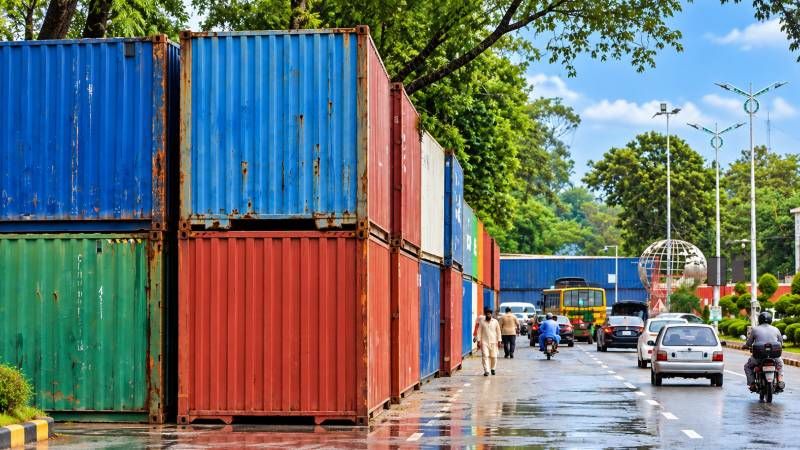
ISLAMABAD: Pakistan’s capital has once again been sealed with shipping containers as authorities seek to stop protesters from reaching the area around D-Chowk, a major political gathering point near parliament and other state institutions.
The barriers are intended to contain the marchers. But they have also created a powerful image of a state protecting its institutions from the people those institutions are meant to serve.
Parliament represents the public, the judiciary is expected to protect justice, and the Constitution is meant to safeguard citizens’ rights. Yet in Islamabad, these symbols of democratic authority now appear to require protection themselves. The contrast has raised questions about the health of Pakistan’s political system and the growing distance between the state and its citizens, reported in an article of The Friday Times Pakistan on 30th September.
The immediate dispute concerns the protesters and their demands. But the wider issue is the failure of institutions to provide credible and constitutional channels for resolving public grievances. When citizens lose faith in courts, parliament and other avenues of redress, street protests become one of the few remaining ways to make their voices heard.
The use of containers may prevent people from entering restricted areas, but it cannot resolve the causes of their anger. Physical barriers can delay a confrontation; they cannot restore public confidence. Indeed, they may deepen the impression that the country’s ruling establishment is more concerned with protecting its authority than addressing the problems faced by ordinary people.
Pakistan has experienced military rule, political repression and other forms of centralised power. Yet the current crisis has exposed a different weakness: the use of democratic institutions to sustain arrangements that many citizens view as unaccountable. Constitutional changes, legal measures and institutional decisions have increasingly been seen by critics as tools for protecting powerful interests and limiting political competition.
For years, domestic support and foreign backing helped maintain this system. But public trust has limits. Economic hardship, political exclusion and a lack of accountability can eventually weaken even the strongest political structure. A democratic system cannot remain stable if it relies mainly on appearances while denying citizens meaningful participation and legal protection.
The crisis is not yet a final defeat for Pakistan’s ruling elite. But its institutions appear increasingly fragile. The state may contain a march, yet it cannot permanently contain public anger through barriers and force.
The deeper form of containment is the rule of law. It restrains those who abuse power, protects citizens from aggression and provides peaceful ways to settle disputes. Without it, the containers placed around D-Chowk become more than security measures: they become a symbol of a constitutional order struggling to breathe.