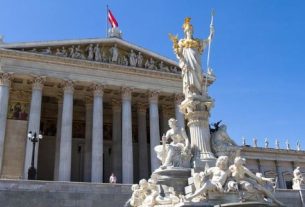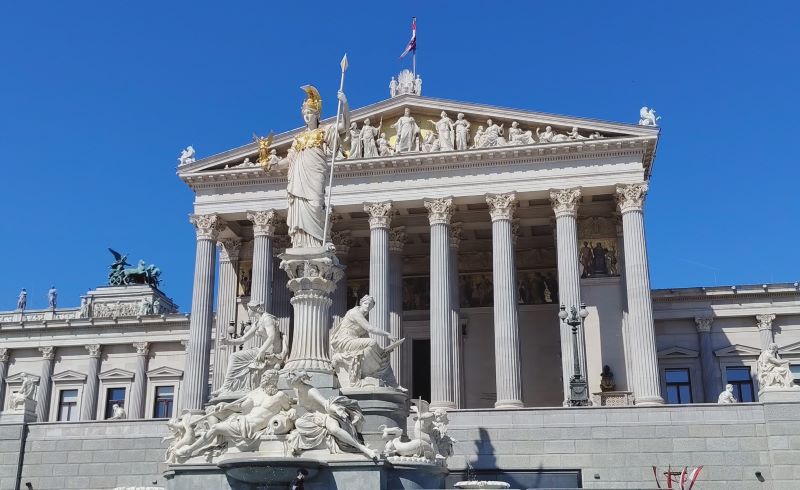
Austria’s parliament has passed 179 laws in the 495 days since the current ÖVP-SPÖ-NEOS coalition took office, reflecting a steady pace of legislative work and an unexpected level of cross-party cooperation.
According to an analysis presented by the Social Democratic Party (SPÖ), this amounts to roughly two and a half measures per week. SPÖ parliamentary leader Philip Kucher highlighted that more than 70 percent of these decisions received support from opposition parties, suggesting that, despite political differences, consensus remains possible on key issues.
Of the total measures, 28 percent were approved unanimously, while 44 percent passed with backing from opposition lawmakers. Only 28 percent were adopted solely by the governing majority. For Kucher, this indicates a functioning parliament where collaboration still outweighs division.
Yet, behind these figures lies a different story about the tone of political debate.
Kucher pointed to what he described as a “rougher tone” in parliament, noting a rise in personal attacks and disciplinary actions. A total of 48 formal reprimands, known as calls to order, have been issued during the current legislative period. Of these, 40 were directed at members of the Freedom Party (FPÖ), accounting for more than 80 percent.
He singled out FPÖ leader Herbert Kickl, stating that he has received more reprimands than he has submitted formal motions. Kucher urged all parties to return to a more respectful style of debate, emphasizing that solving problems should take priority over political confrontation.
Despite these tensions, the legislative output remains historically high. Only during the COVID-19 pandemic did a government pass more laws within a comparable timeframe, when 243 measures were approved under the previous administration.
The figures paint a picture of a parliament that continues to deliver results while struggling to maintain civility in its discourse.