

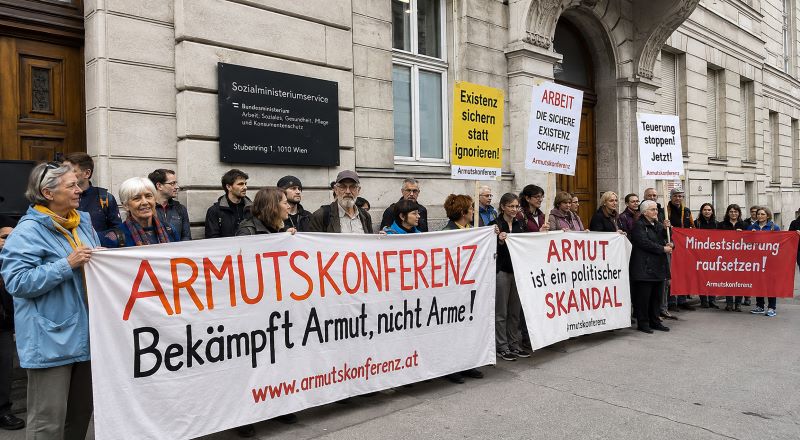
The Austrian Anti Poverty Network staged a protest outside the Social Ministry in Vienna on Thursday, presenting its demands for the planned reform of the country’s welfare system, according to News ORF.
Using large building blocks made of cardboard, the group displayed proposals including minimum standards, guaranteed minimum payments instead of maximum limits, an additional child allowance for low-income workers and support that gives people greater freedom rather than forcing them to use restricted payment cards.
The protest came as negotiations over the new law continued. Social Affairs Minister Korinna Schumann of the Social Democratic Party said talks were still under way.
The Anti-Poverty Network, led at the protest by social affairs expert Martin Schenk, said the welfare debate had ignored many serious problems. Its cardboard blocks were meant to represent the foundations of a law that would look at people and difficulties often left out of public discussion.
The group said emergency support was failing to reach people in need and that housing costs had become impossible for many families to afford. It also called for clear rules to help people facing exceptional hardship.
People with disabilities, the network said, were often denied the chance to live independently. It added that people with mental illnesses were being overlooked, while women affected by violence were frequently left without enough protection or assistance.
The organisation said welfare policy should focus on fighting poverty, not punishing poor people. It wants the new law to guarantee basic living needs, protect people from social exclusion and offer effective support to those seeking work.
The protest highlighted the growing tension around the proposed reform. While the government continues negotiations, anti-poverty campaigners fear that the final law could place new limits on people who already have little security.
For the demonstrators, the cardboard blocks carried a simple message: a fair welfare system must be built on dignity, protection and the right to live independently. The group urged policymakers to address the people hidden in the blind spots of the current debate.





