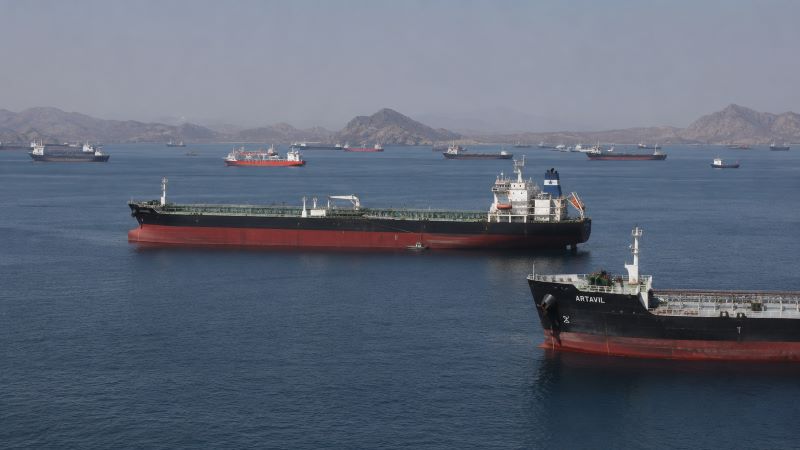
DUBAI: The Strait of Hormuz has become the centre of a growing war of words between the United States and Iran, with both sides claiming control over the strategic waterway that carries a major share of the world’s oil and liquefied natural gas.
The latest dispute began after US President Donald Trump said the United States had “total control” of the strait and suggested Washington would maintain its grip. US Defence Secretary Pete Hegseth later backed the claim, saying the US Navy could sustain its blockade indefinitely by rotating ships in and out of the region.
Iran strongly rejected the American assertion. Hossein Taeb, the newly appointed head of Iran’s Basij paramilitary force, said the strait remained under the “management and control” of Iran and that the country was continuing its activities in complete security.
Iranian military spokesman Ebrahim Zolfaghari also dismissed US claims that ships were passing normally through the waterway. He said commercial vessels and tankers would not be able to travel safely without the permission and supervision of Iranian forces.
The confrontation follows the collapse of a ceasefire in a war that began on Feb 28 with US-Israeli strikes on Iran. Since then, Tehran has effectively restricted traffic through the strait, while Washington has imposed a naval blockade on Iranian shipping and ports.
The dispute has raised fears about the global energy market. The Strait of Hormuz is one of the world’s most important maritime energy routes, and prolonged disruption could affect oil supplies, shipping costs and economies far beyond the Middle East.
Iran has also warned that it will not reopen the waterway unilaterally unless the United States fulfils its commitments. Foreign Minister Abbas Araghchi accused Washington of making another serious miscalculation over the strait.
Meanwhile, environmental concerns are adding to the crisis. Iran said an oil spill had reached Qeshm island and blamed a foreign bulk carrier, calling for international assistance to address the damage.
Tensions have also spread to other regional waterways. Pakistan urged the UN Security Council to strengthen protection for international shipping and seafarers after deadly attacks in the Red Sea, Gulf of Aden and Bab-el-Mandeb.
As military pressure grows, the Strait of Hormuz remains both a vital trade route and a dangerous symbol of the wider struggle for influence in the Middle East.