IRGC Intelligence Chief Assassinated in US-Israeli Strike as Trump Issues Urgent Hormuz Ultimatum
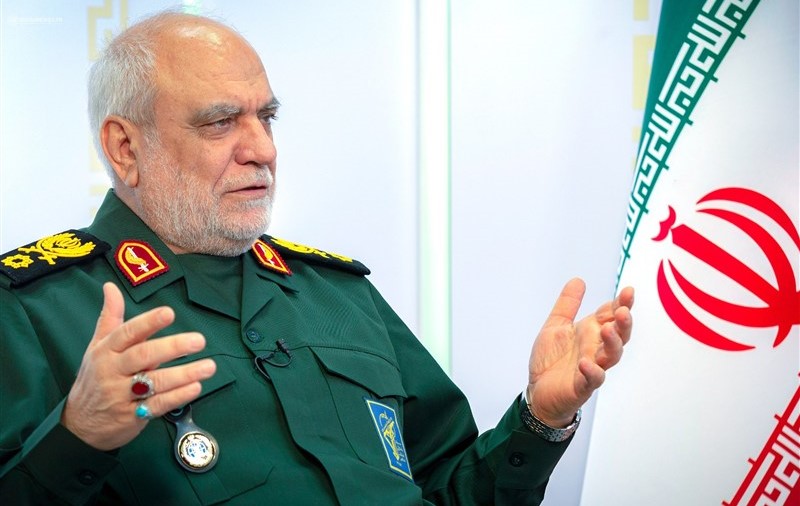
As the first light of Monday, April 6, 2026, spread across Tehran’s skyline, the city awoke to news that sent tremors through an already volatile Middle East, according to BBC News. Iran’s Islamic Revolutionary Guard Corps (IRGC) announced that its intelligence chief, Major General Majid Khademi, had been killed in a targeted strike in the heart of the capital, an attack Tehran swiftly condemned as a “criminal terrorist assault” carried out by American and Israeli forces.
The killing marks one of the most consequential blows yet in a conflict that has spiraled far beyond shadow warfare. Within hours, Israeli officials publicly acknowledged the operation, describing it as part of a sustained campaign against senior Iranian military leadership. Their message was blunt: more such strikes may follow, and no high-ranking figure is beyond reach.
For Tehran, the assassination is more than a military loss. It is a deeply symbolic strike at the center of the state’s intelligence and security apparatus, carried out in the nation’s political heart. The timing has only heightened tensions in a region already convulsed by near-daily exchanges of missile fire and retaliatory attacks stretching from Iran and Israel to US-linked sites across the Gulf.
Reports from across the region suggest the conflict is widening with alarming speed. Iranian missile strikes reportedly hit Haifa, causing casualties, while further attacks have been reported near strategic sites in the United Arab Emirates and Saudi Arabia. What once appeared to be a contained confrontation now bears the unmistakable signs of a broader regional war.
Against this backdrop, US President Donald Trump intensified the crisis with a stark and incendiary ultimatum centered on the Strait of Hormuz, the narrow waterway through which a significant share of the world’s oil supply passes. In a forceful social media statement issued Sunday, Trump demanded that Iran restore full passage through the strategic chokepoint by 20:00 Eastern Time on Tuesday (01:00 BST Wednesday).
His warning was dramatic and ominous.
“Tuesday will be Power Plant Day, and Bridge Day, all wrapped up in one, in Iran. There will be nothing like it!!!”
The statement appeared to signal possible strikes on key civilian infrastructure should Tehran fail to comply. Trump further warned that if the strait remained obstructed, Iran would be “living in Hell,” language that immediately reverberated across diplomatic and military circles.
Iran’s response was swift and uncompromising. Officials in Tehran rejected the ultimatum outright, describing it as an act of coercion and a dangerous escalation that could amount to incitement of war crimes if civilian infrastructure were deliberately targeted. Government spokespeople vowed a “much more devastating” response to any such attack, promising retaliation that would be “severe and expansive.”
Yet beyond the rhetoric of governments and generals, the mood inside Iran tells a more intimate story.
Across Tehran and other major cities, the atmosphere is thick with unease. State-backed rallies filled some streets, where demonstrators waved national flags and chanted slogans against what officials called the “American-Zionist enemy.” The scenes projected defiance and national solidarity.
But behind closed doors, another reality persists.
Residents, already enduring blackouts, inflation, and mounting economic hardship, spoke quietly of fear, fear of what another night of airstrikes might bring, fear of bridges collapsing into darkness, fear of power stations reduced to fire and ash. For many families, the prospect of strikes on infrastructure is not an abstract military threat but a deeply personal one: darkened apartments, interrupted water supplies, hospitals under strain, and the slow erosion of ordinary life.
Meanwhile, Washington is preparing to spotlight a separate dramatic development. President Trump is expected to address the nation regarding what officials have described as the successful rescue of a second US airman from an F-15E fighter jet reportedly shot down over Iranian territory. The operation, carried out deep inside hostile airspace, is being framed by the White House as a high-risk military success and a symbol of American resolve.
Taken together, the assassination in Tehran, the looming Hormuz deadline, and the intensifying cycle of retaliation underscore the dangerous trajectory of a conflict whose consequences now extend far beyond the region.
At stake are not only military calculations and national pride, but global oil supplies, fragile alliances, and the ever-present risk of a wider war that could engulf the Middle East.
As the deadline approaches and threats harden on all sides, diplomats and world leaders are watching with mounting anxiety, searching for even the narrowest path away from catastrophe.
For now, the region stands suspended between warning and action between diplomacy’s last breath and the possibility of a far more devastating chapter to come.