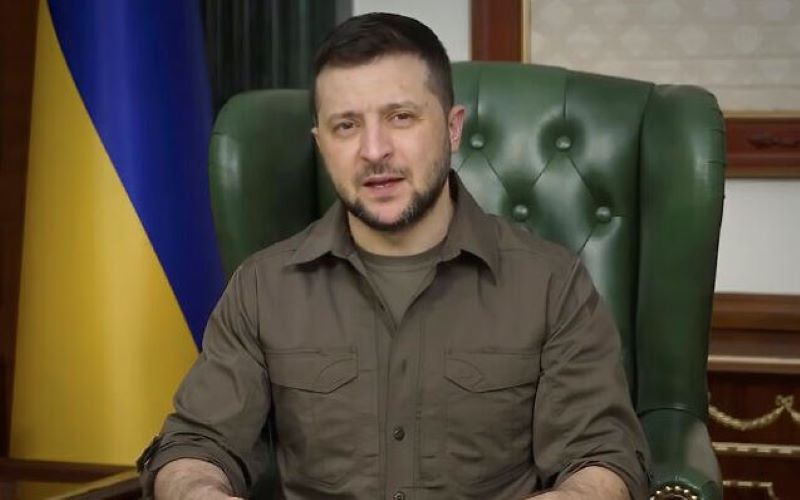
Ukrainian President Volodymyr Zelensky declared that a potential peace agreement to end Russia’s war on Ukraine is “90 percent ready,” striking a cautious but resolute tone in a New Year address that underscored both hope and deep uncertainty after nearly four years of conflict.
Speaking from Kyiv, Zelensky said the remaining 10 percent of the deal would “determine the fate of peace, the fate of Ukraine, and the fate of Europe.” He made clear that Ukraine would not accept peace at any price. “We want the end of the war—not the end of Ukraine,” he said, rejecting demands that Kyiv withdraw from the eastern Donbas region.
Donbas remains the central fault line in negotiations. Russia currently controls about 75 percent of the Donetsk region and nearly all of neighboring Luhansk, together forming the industrial heartland Moscow insists must fall fully under its control. Zelensky warned that conceding the region would amount to surrender.
His remarks came amid heightened tensions after Russia released what it claimed was evidence of Ukrainian drones targeting President Vladimir Putin’s private residence near Lake Valdai. Kyiv has denied the allegation, and the footage has not been independently verified. The Kremlin said it would reassess its stance in peace talks, while EU foreign policy chief Kaja Kallas dismissed the claim as a “deliberate distraction” aimed at derailing negotiations.
In contrast to Zelensky’s lengthy address, Putin delivered a brief New Year message praising Russian troops and expressing confidence in victory, referring to the invasion as a “special military operation.”
Zelensky also emphasized the need for binding security guarantees, saying promises without enforcement risk prolonging war. Following recent talks with U.S. President Donald Trump, he said Washington had proposed 15-year security guarantees, though details remain unclear.
International diplomacy is intensifying. European leaders are set to meet in Paris on January 6, while U.S., British, French, and German officials have resumed discussions on ending the war. Yet despite growing momentum, any agreement ultimately hinges on Moscow’s willingness to compromise—an outcome that, for now, remains elusive.