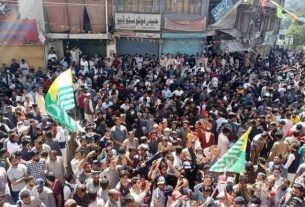
Muzaffarabad, Azad Jammu & Kashmir — Under an uneasy dawn’s hush, the veins of Azad Kashmir throbbed with protest. On Monday, the Jammu Kashmir Joint Awami Action Committee (JKJAAC) launched a sweeping “shutter-down, wheel-jam” strike across the territory, demanding long-denied political and economic rights. Markets closed, transport stalled, and the hum of mobile phones fell silent in what amounted to a de facto siege.
In Muzaffarabad, Kotli, Mirpur and other towns, mournful tension splintered into violence. Police opened fire on demonstrators, killing two and wounding more than 22, according to multiple local and Indian-media reports.
Protesters and bystanders showed bullet casings in viral videos on X and Telegram, while anguished messages circulated on WhatsApp groups pleading for medics and ambulances.
Observers say the JKJAAC’s 38-point charter; long in gestation, crystallized years of grievances: abolish 12 assembly seats reserved for Kashmiri migrants, strip elite privileges, secure royalties from hydropower projects, reform electricity and flour pricing, and restore governance rights.
Ahead of the strike, authorities staged flag marches in major towns and sealed entry points, while in many districts, communications internet, mobile, even landlines were shut entirely. The blackout intensified the sense of isolation.
From Islamabad, Prime Minister Shehbaz Sharif appealed to JKJAAC to retract its indefinite lockdown call, promising dialogue.
But in cyberspace, the tone was far less temperate. On social media, protesters framed the struggle as a confrontation between the people and a government that has long silenced dissent. Some Telegram posts threatened escalation into “plan D” if demands were not met.
In the hours that followed, streets remained heavy with fear and defiance. AJK’s press offices remained unreachable, and hospitals in Muzaffarabad reported a steady trickle of wounded. The strike, more than symbolic, now sits on a precipice. Either concession or crackdown may come and with each passing hour, the cost in blood and burden rises.