The Henley Passport Index for 2025 unveils significant shifts in global passport rankings, with Singapore maintaining its lead as the world’s most powerful passport. Singaporean citizens now enjoy visa-free or visa-on-arrival access to a record-breaking 195 destinations, reinforcing their nation’s dominance in global mobility.
Japan, which previously held the top position, has slipped to second place. The Japanese passport now offers its holders visa-free access to 193 destinations, just shy of Singapore’s tally. Despite the drop, Japan’s passport remains one of the strongest, reflecting its global partnerships and diplomatic reach.
A group of nations—including Finland, France, Germany, Italy, South Korea, and Spain—shares the third position, each offering visa-free access to 192 destinations. These countries continue to demonstrate robust international ties and their citizens’ unparalleled travel privileges.
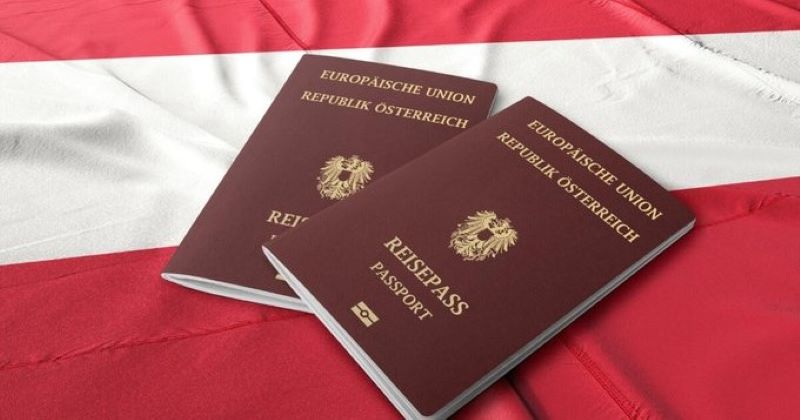
Austria, alongside Denmark, Ireland, Luxembourg, the Netherlands, Norway, and Sweden, ranks fourth on the Henley Passport Index. Austrian citizens can access 191 destinations without requiring a prior visa. Although this marks a slight decline from its 2024 ranking, Austria remains among the global leaders in mobility, cementing its position as a key player in international travel.
The top 10 countries in the 2025 rankings include:
- Singapore (195 destinations)
- Japan (193 destinations)
- Finland, France, Germany, Italy, South Korea, Spain (192 destinations)
- Austria, Denmark, Ireland, Luxembourg, the Netherlands, Norway, Sweden (191 destinations)
- Belgium, New Zealand, Portugal, Switzerland, United Kingdom (190 destinations)
- Australia, Greece (189 destinations)
- Canada, Malta, Poland (188 destinations)
- Czech Republic, Hungary (187 destinations)
- United States, Estonia (186 destinations)
- Latvia, Lithuania, Slovenia, United Arab Emirates (185 destinations)
A Declining U.S. Passport
The United States has experienced a continued decline in its ranking, now occupying the ninth position with visa-free access to 186 destinations. Once a consistent frontrunner, the U.S. passport has been slipping steadily over the past decade, with analysts citing changing geopolitical dynamics and shifts in international relations.
Challenges at the Lower End
At the other end of the spectrum, Afghanistan remains at the bottom of the rankings. Afghan passport holders can access only 26 destinations without a visa, underscoring the severe travel restrictions faced by citizens of conflict-ridden nations. This represents the starkest gap in mobility on the index, with a difference of 169 destinations between the highest-ranked Singaporean passport and Afghanistan’s.
The bottom 10 countries in the rankings include:
106. Afghanistan (26 destinations)
105. Syria (27 destinations)
104. Iraq (31 destinations)
103. Yemen, Pakistan (33 destinations)
102. Somalia (35 destinations)
101. Nepal (39 destinations)
100. Palestine, Libya, Bangladesh (40 destinations)
99. North Korea (41 destinations)
98. Eritrea (42 destinations)
97. Sudan (43 destinations)
Key Trends and Surprises in 2025
One of the standout performers in this year’s index is the United Arab Emirates (UAE). Over the past two decades, the UAE has surged from 62nd place in 2006 to its current position in the top 10. UAE citizens can now travel to 185 destinations without a visa, an increase of 72 destinations since 2006, reflecting the nation’s growing diplomatic influence and global partnerships.
On the other hand, Venezuela has emerged as one of the significant losers in this year’s rankings. Once positioned at 25th place in 2006, Venezuela’s passport now ranks 45th, allowing visa-free travel to only 121 destinations. The decline highlights the impact of political and economic instability on a nation’s global mobility.
A Barometer for Global Mobility
The Henley Passport Index, produced by global advisory firm Henley & Partners, evaluates the strength of passports based on the number of destinations their holders can access without requiring a visa. The rankings are derived from data provided by the International Air Transport Association (IATA) and supplemented by extensive research.
Christian H. Kaelin, chairman of Henley & Partners, remarked on the widening gap in global mobility, calling it a “sobering reminder of the privileges of birthright.” The disparity between the top-ranked Singaporean passport and Afghanistan’s is a striking testament to the inequalities faced by individuals based on their nationality.
As 2025 unfolds, the Henley Passport Index serves as a critical barometer of international relations, highlighting the interconnectedness of mobility, diplomacy, and global cooperation. While countries like Austria and Singapore continue to excel, others face significant challenges, reflecting the ever-evolving geopolitical landscape.