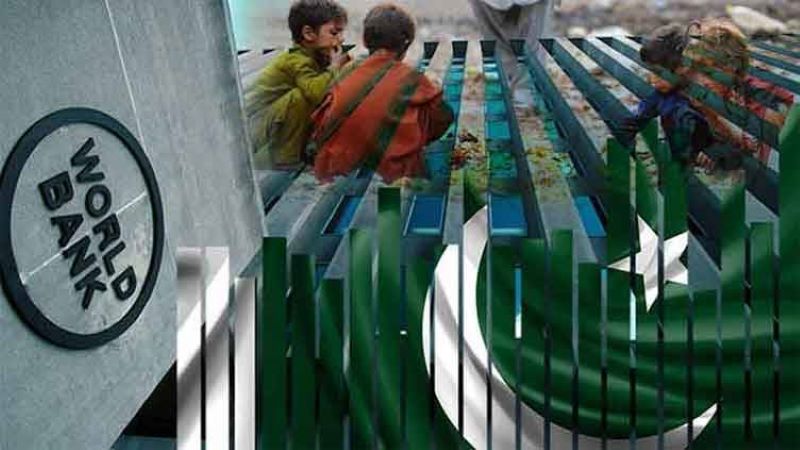
Washington/Islamabad — In a significant recalibration of global poverty metrics, the World Bank has raised the poverty threshold for lower-middle-income countries, pushing Pakistan’s poverty rate from 39.8% to a sobering 44.7%, reported by The Nation Newsweb.
The revised framework now defines poverty as living on less than $4.20 per day—up from the previous benchmark of $3.65. Under this new measure, an estimated 107.95 million Pakistanis fall below the poverty line, painting a starker picture of economic hardship across the country.
The Bank also introduced an updated extreme poverty threshold of $3 per day. By that metric, approximately 16.5% of Pakistan’s population—around 39.8 million people—are living in conditions of severe deprivation.
Officials stress that while the statistics have shifted due to methodological changes, the lived realities of most Pakistanis remain unchanged. “The numbers reflect a reclassification, not a deterioration,” a senior economist familiar with the report noted. Still, the redefined standards cast a sharp light on the vulnerability of millions in a country grappling with inflation, low growth, and fiscal instability.
The analysis draws on data from Pakistan’s 2018–2019 household survey, as the release of updated census data remains delayed. Despite being several years old, the figures offer the most comprehensive snapshot of poverty trends under the new global criteria.
The World Bank also flagged the upper-middle-income poverty line—set at $8.30 per day—under which a staggering 88.4% of Pakistan’s population falls. The figure underscores the depth of income insecurity, even among those above the official poverty threshold.
As Pakistan navigates ongoing negotiations with international lenders and rising cost-of-living pressures, the revised poverty classifications offer a sobering reminder of the challenges ahead for policymakers and citizens alike.