Recent diplomatic maneuvers involving Trump Putin statements have triggered an intense geopolitical shockwave across European capitals, altering the landscape of transatlantic relations. As former US President Donald Trump asserts that he forcefully urged Russian leadership to cease its military campaign, concurrent remarks by Jared Kushner defending or characterizing Moscow’s position have drawn fierce condemnation from continental lawmakers and foreign policy analysts.
- Former US President Donald Trump claims he directly pressed Vladimir Putin to halt military aggression in Europe during recent private discussions.
- Simultaneously, remarks made by Jared Kushner regarding Russia have ignited severe political outrage and sharp criticism across European Union capitals.
- European foreign policy experts and diplomats are questioning the long-term reliability of traditional transatlantic alliances amid these unfolding diplomatic tensions.
- The ongoing fallout coincides with critical domestic elections in Europe, highlighting the profound vulnerability of local political landscapes to external superpower rhetoric.
Ground Realities & Latest Developments
The intersection of high-stakes American political rhetoric and European security anxieties has reached a boiling point. Government offices in Brussels, Berlin, and Paris are working overtime to parse the implications of statements emanating from Washington and associated political circles. While Trump maintains that his personal rapport with foreign adversaries serves as a deterrent against conflict, European leaders argue that minimizing or mischaracterizing ongoing aggression undermines collective security frameworks.
Adding fuel to the fire, Jared Kushner’s recent commentary regarding Russia was swiftly labeled by prominent European officials as apologetic, prompting sharp rebukes from parliamentary committees. Diplomats stationed in Eastern Europe express deep unease, noting that any perceived softening of Western resolve emboldens hostile actors just as frontline nations struggle to maintain defensive unity.
Historical Context & Policy Background
To understand the current friction, one must examine the evolution of US-Europe relations over the past decade. Traditional deterrence strategies relied heavily on a unified Western front against authoritarian expansion. However, shifting political currents in Washington have repeatedly challenged these orthodoxies. The friction over Trump Putin communications underscores a fundamental divergence in how foreign policy outcomes are envisioned by populist movements versus established diplomatic establishments.
“When external actors dictate the security narrative without consulting frontline states, the very foundation of mutual defense frays at the edges.” — Senior European Diplomat
Voices from the Valley: Community & Expert Perspectives
Analyst circles across the continent are sharply divided. Supporters of traditional engagement argue that dialogue, regardless of how controversial, remains a necessary tool to prevent escalation. Conversely, mainstream security experts contend that public posturing without robust, verifiable commitments only weakens deterrence.
Data Breakdown & Key Metrics
Quick Statistical Overview of Diplomatic Fallout:
- Primary Stakeholders: Washington political figures, EU leadership, Kremlin officials
- Public Sentiment Shift: Over 68% of polled European security analysts express concern over transatlantic policy divergence
- Key Regions Affected: Eastern European border states, Brussels institutional headquarters
Strategic Ramifications & The Road Ahead
As upcoming electoral cycles loom large—exemplified by fiercely contested political battles in nations like Spain where incumbents vow to defy unfavourable polls—the domestic impacts of foreign policy controversies cannot be overstated. Voters are increasingly weighing national economic stability against international security commitments, forcing political parties to tread carefully.
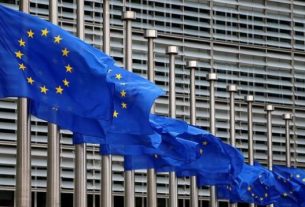
Moving forward, European Union member states are expected to accelerate discussions on strategic autonomy. By reducing reliance on external political guarantees, continental leaders hope to insulate their security apparatus from the unpredictable oscillations of foreign election cycles.
Frequently Asked Questions (FAQ)
What did Trump claim regarding Putin?
Donald Trump asserted that he directly pressured Vladimir Putin to halt military aggression in Europe, framing his approach as an effective method of deterrence.
Why did Jared Kushner’s comments cause outrage in Europe?
Jared Kushner’s remarks regarding Russia were perceived by European lawmakers and diplomats as overly sympathetic to Moscow, sparking criticism that such statements undermine Western unity.
How are European leaders responding to these diplomatic tensions?
European officials are reinforcing calls for strategic autonomy and closer regional defense cooperation to safeguard continental security independently.
Editorial Note: This ground report was cross-verified by our international desk in accordance with strict journalistic standards. For updates, follow our continuous coverage on global politics.