

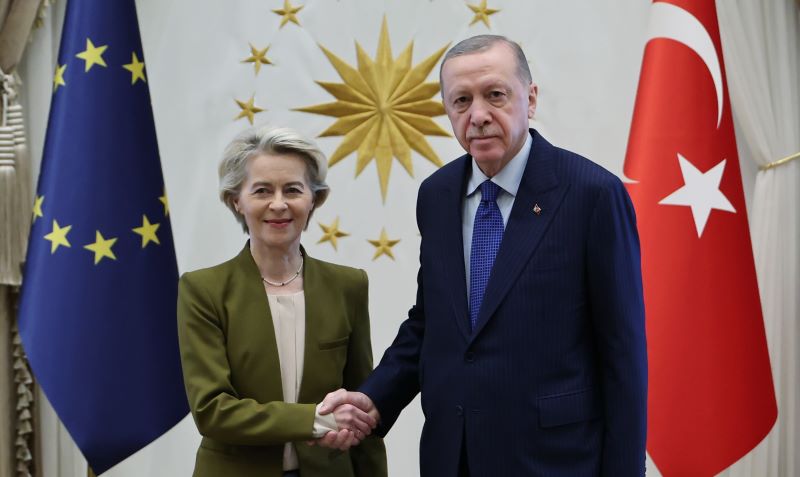
Ankara – European Commission President Ursula von der Leyen announced on Tuesday that the European Union will deepen its engagement with Syria’s new leadership following the ousting of President Bashar al-Assad. Speaking after talks in Ankara with Turkish President Recep Tayyip Erdogan, von der Leyen emphasized the EU’s commitment to supporting stability in the region and preventing a resurgence of extremist threats, particularly from groups like Daesh.
The shift comes as European nations grapple with their approach to Hayat Tahrir al-Sham (HTS), a group rooted in Al-Qaeda’s Syrian affiliate that has played a key role in Assad’s overthrow. While HTS has long been regarded in the West as a terrorist organization, its evolving rhetoric and role in Syria’s transitional government have led to cautious diplomatic engagement. “Now we must step up and continue direct engagement with HTS and other factions,” von der Leyen stated, highlighting the need for constructive dialogue with Syria’s interim administration.
In a significant development, the EU recently dispatched a senior diplomat to Syria to establish direct contact with the interim government. Turkey, which has maintained dialogue with HTS, reopened its embassy in Damascus on Saturday. Following this, the EU announced plans to reopen its mission in Syria after what EU foreign policy chief Kaja Kallas described as “constructive talks” with the new Syrian leadership.
Von der Leyen warned, however, that the threat of extremist resurgence remains a pressing concern. “The risk of a Daesh resurgence is real, and we cannot let this happen,” she asserted.
Turkey has conducted multiple military operations in Syria since 2016, targeting both Daesh and Kurdish forces, which Ankara views as threats to its national security. Erdogan reiterated his stance against allowing a “terror corridor” along Turkey’s southern border. Von der Leyen acknowledged Turkey’s security concerns, stressing that “legitimate issues must be addressed” to ensure regional stability.
This marks a critical turning point in EU-Syria relations, with diplomacy taking center stage amid delicate geopolitical complexities.





