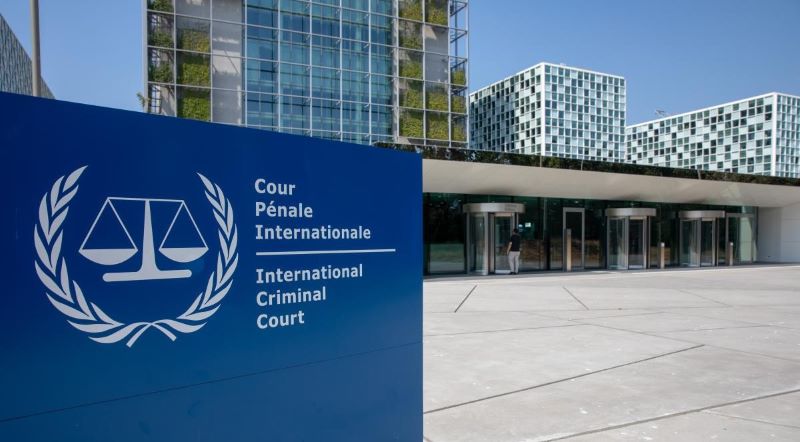
European leaders have voiced strong concern after the United States imposed new sanctions on officials at the International Criminal Court, warning that the measures could weaken the court’s independence and its ability to pursue justice for victims of serious crimes.
European Commission President Ursula von der Leyen and European Council President Antonio Costa said they stood firmly with the ICC, its president Tomoko Akane of Japan, and all officials working to defend international law.
“The ICC helps deliver justice to the victims of some of the world’s most horrific crimes,” they said in a joint message on X. They stressed that judges and court staff must be able to work freely, without political pressure or outside interference, according to Anadolu Agency.
EU foreign policy chief Kaja Kallas said the bloc “deeply regrets” Washington’s decision to target Akane and Abdoulaye Seye, a senior trial lawyer in the ICC prosecutor’s office. She described the court as a central part of the global fight against impunity.
“The court’s independence, impartiality and ability to carry out its mandate must remain free from pressure, intimidation or interference,” Kallas said. She added that the European Union would continue to support and protect the ICC and its staff.
Britain, Germany, Spain, the Netherlands and France also backed the court. The British Foreign Office said the United Kingdom supports the ICC’s independence and wants those responsible for the world’s gravest crimes to be held accountable.
Germany said the court had helped expose crimes against humanity and bring perpetrators to justice. Spain called the sanctions a “flagrant attack” on the ICC’s independence and integrity, while France said coercive measures against judges, staff and supporting civil society groups were unacceptable.
UN High Commissioner for Human Rights Volker Türk urged Washington to withdraw what he called “unacceptable” sanctions. He called on countries to defend institutions created to protect human rights and the rule of law.
The ICC said the latest measures target Akane and Seye. The court said that nine of its 18 judges, both deputy prosecutors, its former prosecutor and one staff member are now under US sanctions.
The new designations are part of sanctions imposed by President Donald Trump in February 2025. The Hague-based court rejected the move, calling it a “flagrant attack” on judicial independence.