

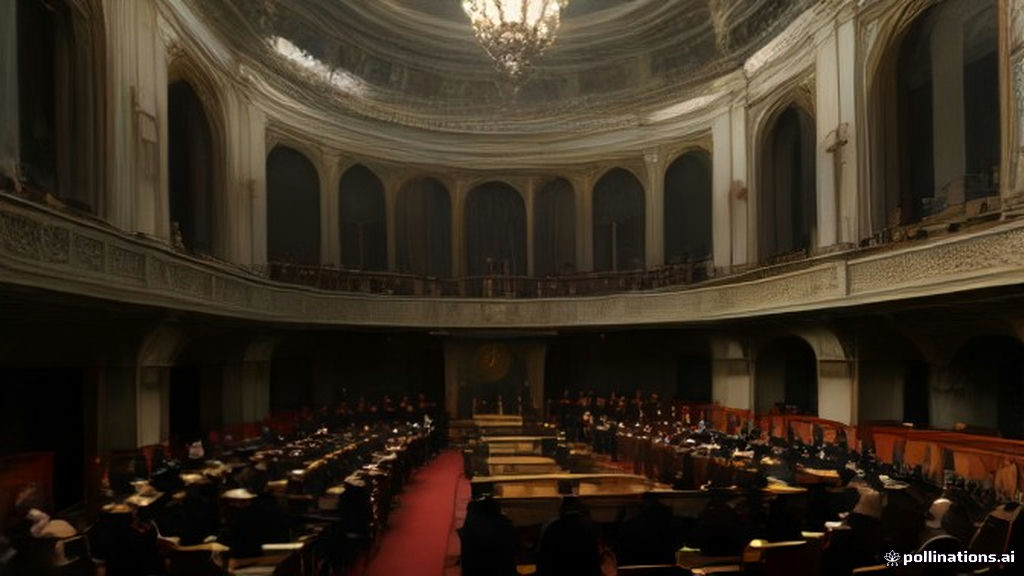
Democratic resilience stands at a critical juncture across the European continent as political actors, parliamentary leaders, and economic analysts confront an era of heightened volatility. Recent high-level meetings between regional leaders and Council of Europe parliamentarians have underscored a stark reality: public confidence in core state institutions is eroding precisely when geopolitical and economic pressures demand absolute solidarity. From parliamentary chambers to border communities, the debate over how to safeguard democratic systems against internal fracture and external shock has reached a fever pitch.
- Ibrahimović emphasizes that institutional trust is foundational for sustainable democratic resilience across European states.
- Internal warnings from political factions highlight vulnerabilities in long-term continental security and defense strategies.
- Economic risks are intensifying as anti-immigration platforms gain electoral traction in multiple jurisdictions.
- Observers note that bridging the gap between public expectation and institutional delivery remains the ultimate governance challenge.
Ground Realities & Latest Developments
The conversation surrounding democratic resilience gained urgent momentum during recent parliamentary sessions involving prominent diplomats and European delegates. Discussions centered on the widening chasm between legislative bodies and the everyday concerns of citizens. When inflation bites, public services strain, and borders face unprecedented migratory pressures, traditional political structures often struggle to deliver swift, palpable solutions.
Simultaneously, political movements centered on anti-immigration platforms are reshaping electoral maps from Western Europe to the eastern frontiers. These shifts are not merely ideological; they translate directly into budgetary reallocations, legislative gridlock, and altered trade dynamics. Analysts point out that as populist narratives capture voter imaginations, traditional parties find themselves scrambling to adapt their messaging, occasionally compromising long-term institutional stability for short-term electoral survival.
Historical Context & Policy Background
To understand the current friction within European governance, one must look back at the post-war institutional architecture designed to prevent continental fragmentation. Organizations such as the Council of Europe were built on the premise that shared legal standards, human rights frameworks, and transparent oversight would guarantee lasting peace and prosperity. However, these frameworks were formulated in an era of distinct geopolitical boundaries and predictable economic cycles.
Over the past decade, successive crises—ranging from sovereign debt downturns to pandemic disruptions and energy shortages—have exposed structural fatigue within these institutions. Citizens increasingly perceive governing bodies as slow, bureaucratic, and detached from local realities. This perceived detachment fuels public cynicism, opening the door for populist alternatives that promise rapid disruption over institutional continuity.
“Democratic resilience is not measured by the absence of conflict, but by the capacity of our institutions to absorb shocks without losing the trust of the governed.”
Voices from the Valley: Community & Expert Perspectives
On the ground, civil society organizations and local administrators report a palpable sense of fatigue among ordinary voters. In municipal offices and regional forums, leaders are caught between top-down continental mandates and bottom-up populist anger.
‘People do not care about abstract bureaucratic metrics when their utility bills double or local services disappear,’ explains a senior policy analyst based in Strasbourg. ‘Democratic resilience requires tangible proof that the system works for the average working family. Without that, institutional rhetoric falls flat.’
Data Breakdown & Key Metrics
| Metric Category | Observed Trend | Impact Level |
|---|---|---|
| Institutional Trust Index | Declining across urban centers | High |
| Anti-Immigration Polling | Upward trajectory in 12 states | Critical |
| Economic Risk Exposure | Heightened supply chain vulnerability | Moderate to High |
Strategic Ramifications & The Road Ahead
The convergence of economic uncertainty, defense anxieties, and populist electoral gains poses a formidable test for European policymakers. If mainstream parties fail to address voter grievances regarding economic security and border management, the erosion of institutional legitimacy may become irreversible.
Conversely, proactive reforms that prioritize transparency, economic inclusion, and direct civic engagement could revitalize democratic resilience. Lawmakers are under intense pressure to demonstrate that democratic systems can protect citizens from external shocks while upholding fundamental human rights and rule of law.
Frequently Asked Questions (FAQ)
What is the core pillar of democratic resilience according to recent parliamentary meetings?
The foundational pillar is public trust in state institutions, ensuring that governance structures remain transparent, accountable, and responsive to citizen needs during periods of crisis.
How do anti-immigration politics impact broader European economic stability?
Shifting political dynamics can lead to legislative gridlock, altered trade policies, and fragmented border management, which in turn introduce supply chain disruptions and investor uncertainty.
What steps are European institutions taking to address declining trust?
Lawmakers are increasing regional dialogues, attempting to streamline bureaucratic procedures, and focusing on localized economic interventions to bridge the gap between policy and public expectation.
Reporting by our European affairs desk. Ground dispatch verified against official parliamentary statements and regional policy summaries.





