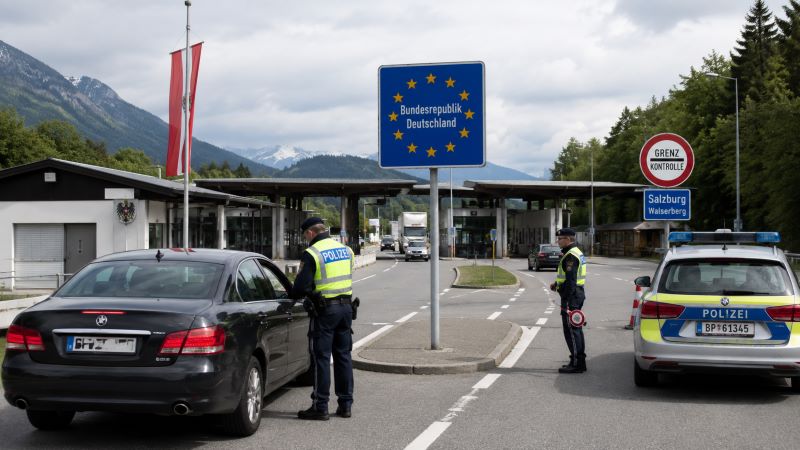
Border controls between Austria and Germany are once again under debate, as political leaders defend them while many travelers call for their removal.
The checks, including those at the busy Walserberg crossing near Salzburg, were introduced more than a decade ago during the height of Europe’s migration crisis. At the time, large numbers of asylum seekers from the Middle East were entering the continent, and Germany, one of the main destinations, set up checkpoints along highways and key roads to manage and reduce irregular migration, according to ORF News.
Today, those controls remain in place. Mobile checkpoints operate not only on major routes but also on smaller roads linking towns such as Grödig, Marktschellenberg, Berchtesgaden, Salzburg-Liefering, and Freilassing.
However, recent figures suggest the situation has changed. German federal police turned back about 3,000 people at crossings between Salzburg and Upper Bavaria last year, roughly one-third fewer than the previous year. The European Union also reports a wider drop in irregular migration. EU Migration Commissioner Magnus Brunner has argued that the controls should now be lifted, pointing to a 37 percent decrease in the first half of 2026 and a 55 percent decline over the past two years.
Travelers, especially summer holidaymakers from Austria, Germany, and South Tyrol, largely agree. Many complain that the checks cause long traffic jams and unnecessary delays, turning short journeys into frustrating waits.
Yet authorities remain cautious. Interior ministers in Austria, Germany, and Bavaria insist the controls are still necessary, not only to deter human smuggling but also to catch suspects wanted through international police alerts. For now, despite declining migration numbers, there is little sign the border checks will end soon.