

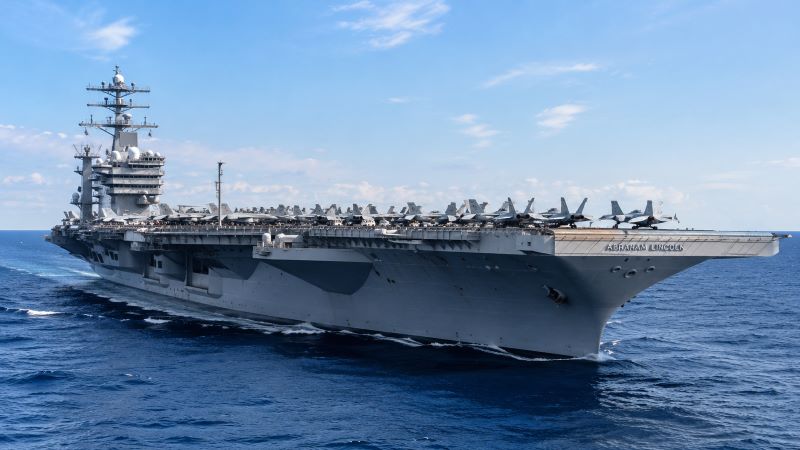
Concerns are growing over the physical and mental well-being of about 5,000 sailors and Marines aboard the USS Abraham Lincoln, which has remained at sea for more than 250 days during the US military campaign against Iran.
Military families and news organisations have reported food shortages, broken toilets, mouldy showers, long periods without hot water and laundry facilities that have remained out of service for weeks. Some service members have also reportedly struggled to obtain basic items such as soap, toothpaste and deodorant. Families said the long deployment, exhausting work schedules and limited opportunities to go ashore had badly affected morale, according to BBC News.
Several military news outlets reported that some sailors had considered jumping overboard. CBS News, citing two unnamed officials, said that a sailor went overboard earlier this month and was rescued by helicopter. The sailor was treated by the ship’s medical team before being transferred elsewhere. The circumstances of the incident are under investigation.
The reports have drawn demands for answers from members of Congress. Connecticut Senator Richard Blumenthal said the carrier had faced alleged shortages of basic supplies, water contamination, plumbing failures, declining mental health, deck-safety concerns and serious delays in the mail system. He questioned whether the US Navy could maintain its current pace of operations without placing sailors under extreme pressure.
Senator Ruben Gallego called for a congressional delegation to visit the ship and investigate the situation.
The carrier left California in November for the South China Sea before being sent to the Middle East ahead of US attacks on Iran in February. Its deployment, originally scheduled to end in May, has been extended several times. Reports say the USS George Washington may soon replace it in a planned rotation, although no official return date has been announced.
Defence Secretary Pete Hegseth rejected the reports as “completely misrepresented”. A Navy official also said there had been no identified rise in reported suicidal thoughts or attempts aboard the ship. The official said combat operations had disrupted traditional supply routes, forcing the Navy to prioritise food, hygiene supplies and mail.
The Navy maintains that sailors have access to clean water, working air conditioning and healthy meals. However, a 2025 study found that naval personnel face serious psychological pressures linked to noise, poor living conditions, demanding schedules and too little time for sleep and rest.





