By Michael Pröbsting
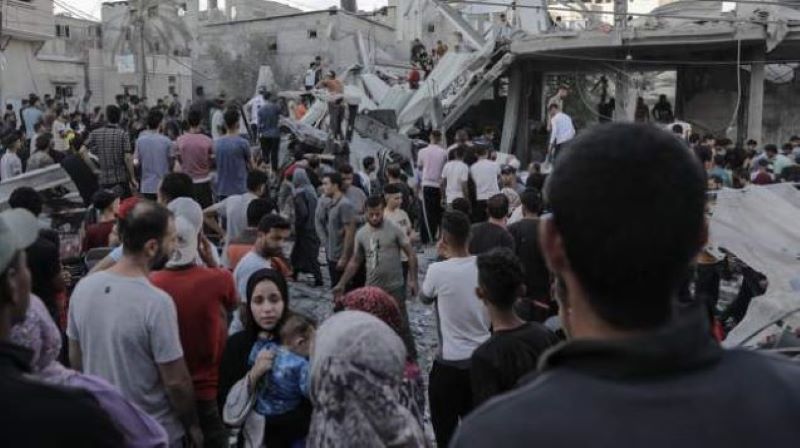
The Palestinian magazine Al-Hadaf has published a highly interesting report about the creation of popular committees in Gaza. According to this publication, “a large-scale national initiative has been launched to form volunteer civil committees in the neighborhoods, camps, and cities of the Strip. The aim is to contribute to rescue and relief operations, serve and protect residents and property, and preserve the social fabric and civil peace in the face of the occupation’s attempts to dismantle the home front.”
The report continues: “The initiative, which was launched with widespread support from national figures and youth groups, was a practical response to the absence of security institutions and the depletion and undermining of the role of rescue, ambulance, and civil defence services, which have been subjected to intense attacks since the beginning of the genocide. It draws on the experiences of people in times of crisis and revolution (a reference to the past two Intifadas, Ed.), where popular committees were an effective alternative for solidarity among citizens, maintaining local security, protecting social cohesion, and preventing violations of human dignity.
The initiative is based on the formation of local volunteer committees whose members, drawn from the neighbourhood, camp, or shelter, are responsible for shifting duties in the neighbourhood. The emphasis is on ensuring that volunteers enjoy broad social acceptance and maintain moral and security integrity to ensure public confidence in them.
The initiative’s organizers emphasize that the committee’s duties must be carried out within the geographical scope of the neighbourhood or block. Members may not move to other areas, in order to preserve the local character of each committee and ensure its effectiveness and direct connection to the community it serves.
It was also emphasized that committee members must adhere to strict ethical guidelines that prevent harassment or restrictions on movement. This ensures that citizens feel that the presence of these committees provides reassurance and protection and is not an additional burden or threat.
These committees contribute to consolidating civil peace as part of the tools for resilience in the face of war. They provide collective protection for homes and property in light of the rampant phenomena of looting and organized robbery. They support the role of ambulance and rescue crews and contribute to getting access to the injured and victims of the ongoing aggression.“
The report adds that these committees also help to identify individuals “collaborating with the occupation who may infiltrate to sow chaos and sabotage, and to thwart the occupation’s attempts to create terror and undermine social solidarity.”
The initiative has been spearheaded by youth groups and receives support from the left-wing Popular Front for the Liberation of Palestine – the third-largest Palestinian party after Hamas and Fatah.
Al-Hadaf is a well-known and respected weekly political and cultural magazine which was founded in 1969 by Ghassan Kanafani. Kanafani is one of the most famous novelists in the Arab world who’s works have been translated into more than 17 languages. He was also a leading militant of the Popular Front for the Liberation of Palestine and drafted their program. Kanafani was murdered by Israel’s secret service Mossad in 1972.
The creation of such popular committees is a very important development in this war as it allows the masses to take their lives in their own hands. Local committees which have the trust of the people are the most effective instrument to organise daily life in these difficult times. This is also very important for combatting the danger of spies and provocateurs who work for the Zionist enemy.
The next necessary step would be that these popular committees get armed and take the security and defence of their motherland in their own hands. In the long run, such committees should become real councils of the masses and provide the basis for popular government which runs the Gaza Strip.
Such important initiatives also show that the Palestinian masses, despite their incredible suffering in face of the genocide by Israel, continue to resist. There is no doubt that the struggle of the Palestinian people and their resistance factions will go down in history as one of the most heroic examples in modern history of a David withstanding a savage Goliath monster for more than one and a half years!
It is therefore all the more important that the international solidarity movement intensifies its activities to support the Palestinian people and their resistance. The workers and oppressed must, through mass demonstrations and strikes, force governments in the Middle East and globally to stop their direct or indirect support for the Zionist state.