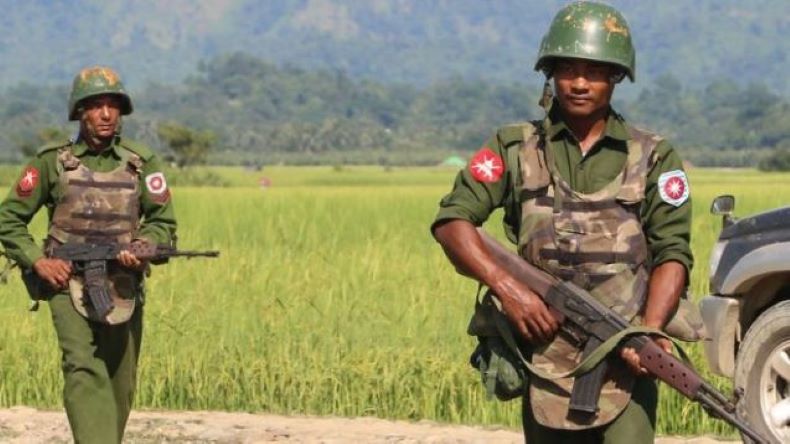
In the southern hills of Myanmar’s Tanintharyi region, a diverse coalition of rebel fighters is emerging in the struggle against the military regime established after the 2021 coup. Among them is the little-known “Muslim Company,” a unit of 130 soldiers within the Christian- and Buddhist-dominated Karen National Union (KNU).
Led by Mohammed Eisher, the Muslim Company symbolizes a growing inclusivity within Myanmar’s resistance, as it incorporates previously marginalized groups into the fight for democracy. “As long as the military remains in place, Muslims and everyone else will be oppressed,” Eisher stated.
The Muslim Company is rooted in a rich historical context, with members tracing diverse ancestries, from Rohingya to Arab traders. Their uniforms bear KNU insignia alongside a star and crescent badge, reflecting their heritage from the All Burma Muslim Liberation Army (ABMLA). In their camp, traditional Islamic practices flourish alongside a commitment to the broader revolutionary cause.
With Myanmar’s military facing widespread opposition, including from Muslims who have historically been scapegoated, the current uprising is marked by unity among ethnic groups. “The revolution will be successful, but it needs more unity,” said Mohammed Yusuf, another leader within the company.
This spirit of collaboration is exemplified by the presence of Buddhist and Christian fighters within the ranks, all united by a common goal: freedom for all peoples of Myanmar.