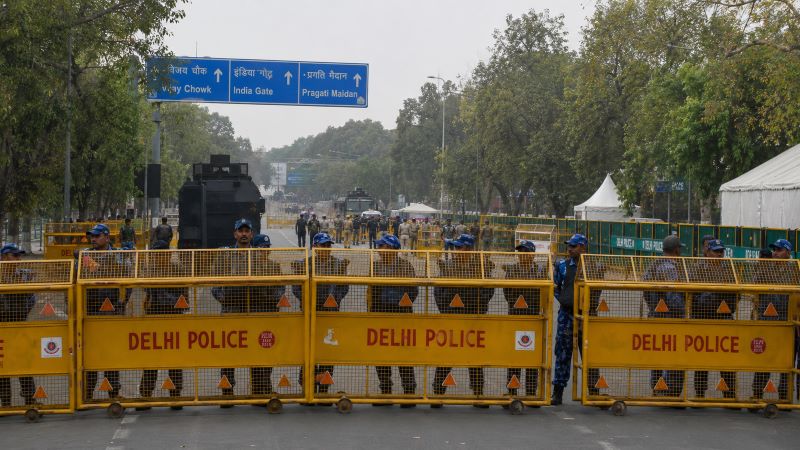
Indian authorities tightened security across Delhi on Sunday ahead of a major opposition march demanding the resignation of Chief Election Commissioner Gyanesh Kumar over a disputed revision of voter lists.
Riot-control vehicles and officers with batons and shields were stationed near Ramlila Maidan, where the rally is due to take place. Police warned of traffic diversions as demonstrators prepare to march nearly 1.5 kilometres from central Delhi to the protest site.
Congress leader Rahul Gandhi will lead the march. Opposition parties say hundreds of thousands may join, presenting it as a major challenge to Prime Minister Narendra Modi and his Bharatiya Janata Party (BJP).
Opposition groups, student organisations, and the youth-led Cockroach Janta Party have held near-daily protests since last month. They allege the voter-list revision favoured the BJP and disproportionately removed Muslim and minority voters.
The Election Commission has rejected the allegations, saying it does not favour any party and that voters removed in error can re-register. The BJP accuses rivals of trying to undermine democracy by questioning legitimate electoral processes.
Tensions rose after The Indian Express reported in September that two of Kumar’s deputies had raised internal concerns about voter-list revisions, registration procedures, and digital systems.
The revision began last year and removed more than 130 million names from voter rolls, more than Japan’s population. Officials said the deletions included 28 million people who had died, 63 million who had moved, and 30 million who could not be traced.
News agency ANI showed heavy security outside the venue, with announcements urging participants to cooperate with police. Senior officer Rohit Rajbir said arrangements had been made at the venue and along the route.
Analysts view the protests as Modi’s most serious political challenge since taking office in 2014, though his government remains stable and the next general election is not due until 2029.