TEHRAN, Oct. 26 (MNA): Senior officials from Iran, Pakistan, Turkey and Saudi Arabia met in Tehran on Monday to discuss regional security, rising tensions and efforts to promote peace across West Asia.
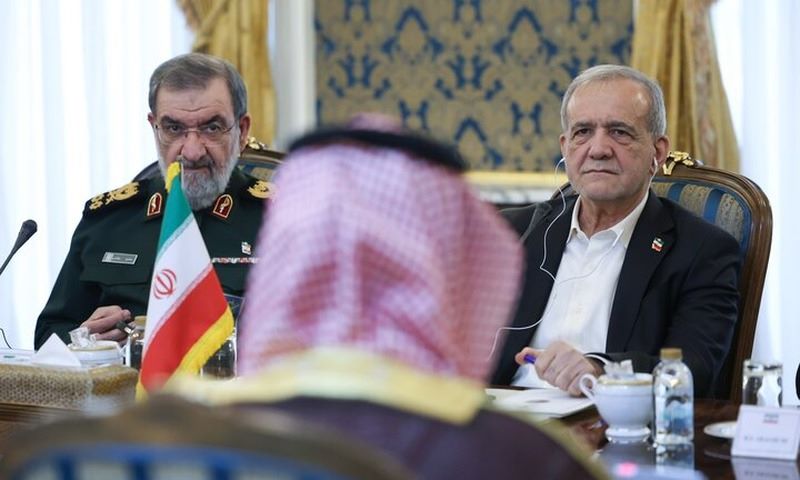
The meeting brought together Saudi Defense Minister Khalid bin Salman Al Saud, Pakistan’s Army Chief Field Marshal Asim Munir and Turkey’s National Intelligence Organization chief Ibrahim Kalin. They held talks with Iranian President Masoud Pezeshkian, Foreign Minister Abbas Araghchi and Supreme National Security Council Secretary Mohsen Rezaei at Saadabad Palace in northern Tehran, reported by Mehr News Agency.
According to Iranian media, the discussions focused on regional security, the consequences of military aggression, and support for Palestine and Lebanon. The talks also addressed the war involving Iran, the US naval blockade and growing tensions across the region.
Iranian officials reportedly told Reuters before the meeting that the nuclear issue was not on the agenda. Tehran has insisted that Washington must meet its conditions before negotiations on the nuclear dispute can begin.
The meeting followed earlier consultations involving senior officials from the four countries. Ali Bagheri, deputy secretary of Iran’s Supreme National Security Council, said the visit was part of efforts to build regional security through cooperation among countries in West Asia, rather than relying on outside powers.
Speaking during the meeting, President Pezeshkian said closer unity among Muslim countries could help prevent further Israeli aggression. He argued that military pressure had failed to weaken Iran and had instead strengthened national unity and public solidarity.
Despite the hardships and losses caused by the conflict, Pezeshkian said, Iranians had remained determined to defend their country. He also expressed support for agreements that could strengthen unity among Islamic countries, saying their shared resources and capabilities could help create a model of justice and development.
At the end of the meeting, the four delegations issued a joint statement pledging to continue dialogue and strengthen cooperation to promote regional peace and security.
The discussions marked a further diplomatic effort by regional powers to address shared security concerns through consultation and closer cooperation.