

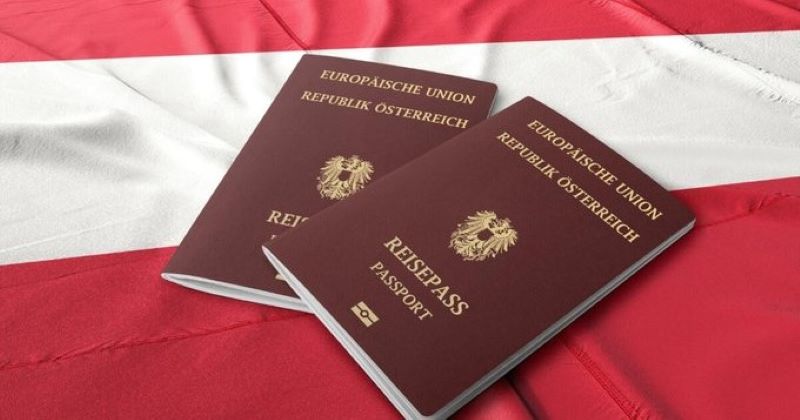
A new campaign in Austria is demanding a change that could reshape the lives of hundreds of thousands of young people: automatic Austrian citizenship for children born in the country to parents who have lived there legally for several years, accordinng to News ORF.
The initiative, presented by political scientists Rainer Bauböck and Gerd Valchars, has drawn support from across Austria’s political past. Former Social Democratic Chancellor Franz Vranitzky and former conservative EU Commissioner Franz Fischler are among its backers. Ahead of Austria’s National Day, organisers will begin collecting signatures under the slogan “A passport that fits.”
At the centre of the proposal is a conditional birthright citizenship rule. Under the plan, a child born in Austria would receive citizenship automatically if their parents had already lived legally in the country for a set number of years. Germany is being held up as an example: children born there receive citizenship when one parent has lived legally and permanently in the country for at least five years, a rule once set at eight.
Austria’s rules are different. A child born in the country does not automatically become Austrian. They may apply for citizenship after six years of residence instead of the usual ten, but the process can still be difficult and exclusionary.
For one of the initiative’s co-founders, documentary filmmaker Olga Kosanovic, the issue is deeply personal. Her application for Austrian citizenship was rejected because, over 15 years, she had spent 58 days fewer in Austria than required. “Every holiday counts,” she said, “even a school graduation trip, studies, or stays abroad for work.” She believes her case is far from unique.
The campaigners argue that the current system creates a quiet but growing democratic problem. About 1.9 million people living in Austria are not citizens. Roughly 300,000 of them were born in the country, yet many have no say in the elections that shape their schools, neighbourhoods, and future.
Valchars warned that if the share of people without voting rights continues to grow, Austrian democracy could lose its representative character. Young adults, he said, are especially affected, as non citizens make up a larger proportion of their generation than of older ones.
For the initiative’s supporters, the question is simple: should a person born and raised in Austria still be treated as a outsider?





